By The Bharat Earth News
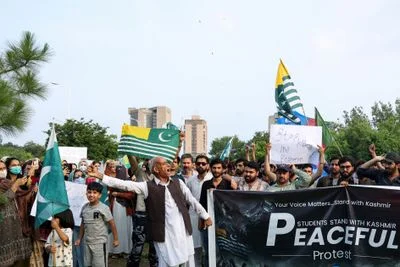
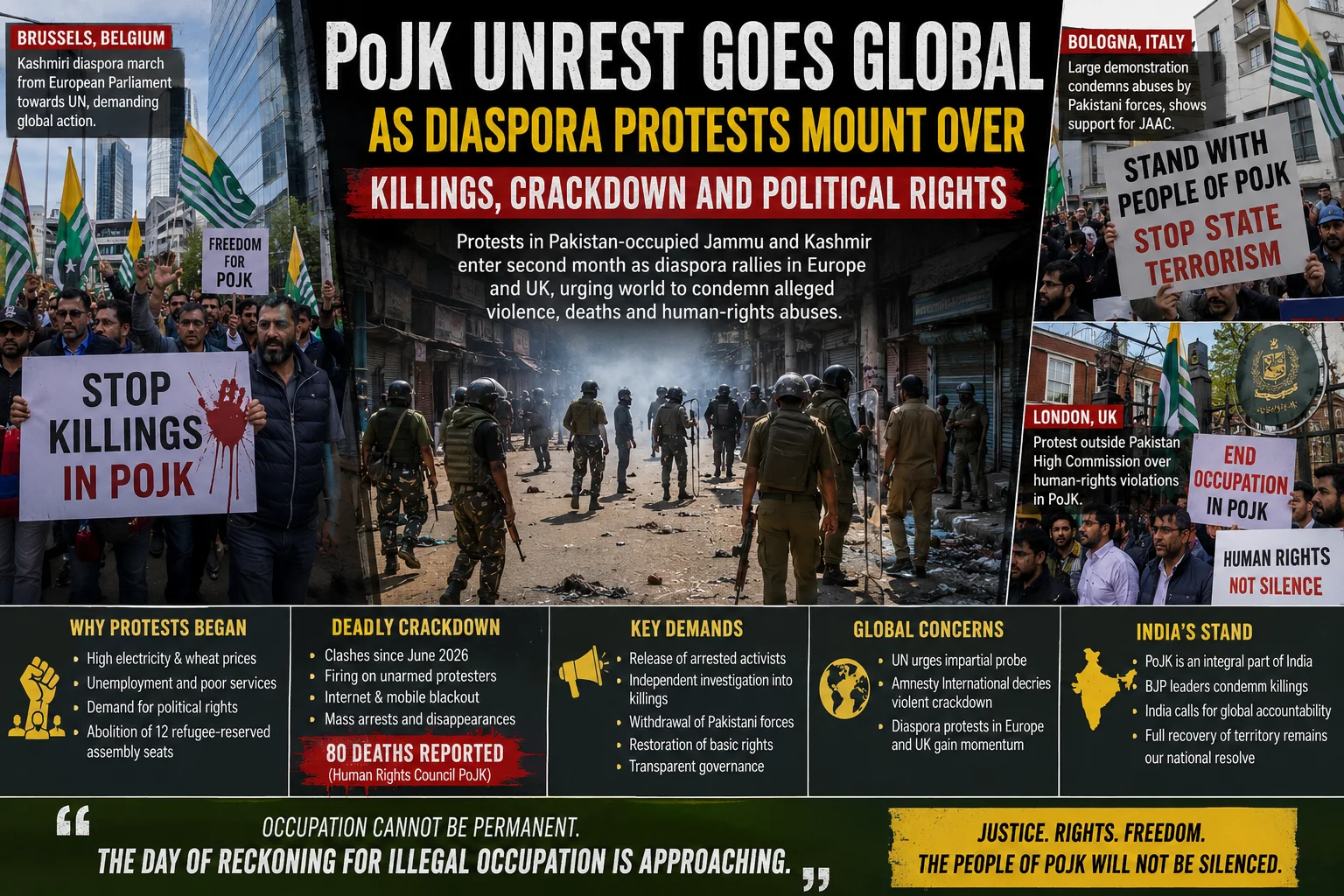
Protests over the deteriorating situation in Pakistan-occupied Jammu and Kashmir (PoJK) have increasingly moved beyond the region, with Kashmiri diaspora groups holding demonstrations in Europe, the United Kingdom and other parts of the world to draw international attention to alleged killings, arrests, communication restrictions and political grievances.
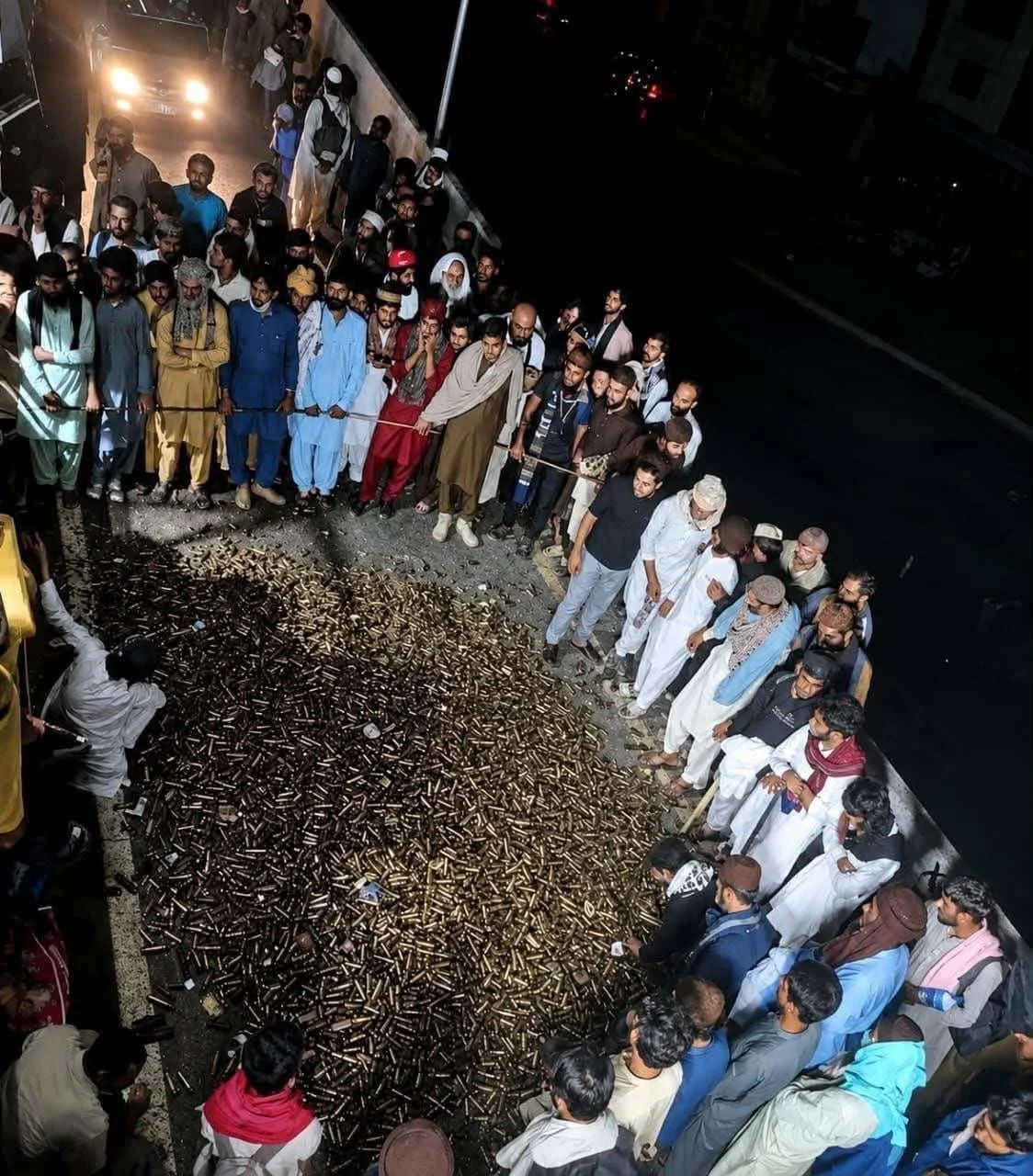
The latest protests come after weeks of unrest in Pakistan-administered Kashmir, where the Joint Awami Action Committee (JAAC) has led demonstrations over electoral reforms, economic issues and the structure of the regional legislature. The agitation intensified during the recent elections, with clashes between protesters and security forces resulting in deaths and injuries.
Reuters reported that more than 30 people were reportedly killed in clashes in Rawalakot during the election-related unrest, while the JAAC has alleged a higher toll. Pakistani authorities have disputed several of the protesters' casualty claims and have accused elements associated with the banned group of attacking law-enforcement personnel.
Diaspora Takes Protest to European Capitals
The unrest has prompted demonstrations by sections of the Kashmiri diaspora abroad.
In Brussels, protesters marched towards European institutions, demanding international scrutiny of developments in PoJK and calling for accountability for alleged human-rights violations. Demonstrations have also been reported in Italy and outside Pakistani diplomatic premises in the UK.
Diaspora groups say the international community should independently examine allegations of excessive use of force, arrests, disappearances and restrictions on communication.
The protests abroad have also sought to highlight the demands of the JAAC and draw attention to the political controversy surrounding seats reserved in the regional assembly for refugees from Indian-administered Jammu and Kashmir.
The dispute over the 12 reserved seats has become one of the central issues in the current political crisis. Critics argue that the arrangement allows political influence from outside the territory, while Pakistani authorities maintain that the seats are part of the region's constitutional and electoral framework.
How the Protests Turned Deadly
The present unrest has its roots in a broader movement demanding economic relief, political reforms and greater accountability from authorities.
The situation became particularly volatile in June after the JAAC was banned by the authorities and protests spread across several parts of the territory. A June 8 clash in Rawalakot left at least seven civilians dead, according to an official cited by Dawn, while four law-enforcement personnel were also reported killed.
The violence escalated again in late July during the first phase of regional elections. The JAAC alleged that security forces opened fire on protesters, with the group claiming more than 40 deaths in Rawalakot. Independent reporting has confirmed a significant number of casualties, although the precise overall civilian death toll remains disputed.
The controversy has been compounded by an internet and mobile communications blackout, making independent verification of casualty figures and events on the ground difficult.
Amnesty International and other rights organisations have called for investigations into allegations of excessive force and for restoration of communications to allow independent reporting and verification.
Conflicting Claims Over Death Toll
Casualty figures have become one of the most contentious aspects of the crisis.
The Human Rights Council of Pakistan-occupied Jammu & Kashmir reported 80 fatalities by early August, including civilian and law-enforcement deaths. However, the figure has not been independently verified and differs substantially from figures cited by Pakistani authorities and international news organisations.
Pakistani officials have rejected allegations that security forces systematically targeted peaceful protesters. At the same time, AJK authorities have reported deaths among police and Rangers personnel and accused members of the proscribed JAAC of attacking law-enforcement agencies.
AJK police said in late July that 26 law-enforcement personnel had died in incidents during 2026 and accused JAAC members of deliberately targeting security personnel.
The competing accounts underline the need for an independent investigation capable of establishing the circumstances behind individual deaths and determining responsibility for violence.
Elections Deepen Political Crisis
The unrest coincided with elections to the AJK Legislative Assembly, which were held in phases because of security concerns.
The JAAC called for a boycott of the elections, while Pakistan Tehreek-e-Insaf also boycotted the polls, citing concerns over the electoral process. Voting in several constituencies was delayed amid continuing violence and security concerns.
The ruling Pakistan Muslim League-Nawaz emerged as the leading force in the contested seats, but the election has been overshadowed by allegations of electoral manipulation and the continuing dispute over refugee-reserved constituencies.
The political dispute has therefore become closely linked with the wider public movement demanding greater local representation and accountability.
Economic Grievances Fuel Anger
The political crisis cannot be separated from longstanding economic grievances.
For years, residents have protested over electricity prices, wheat and food costs, taxation, unemployment and inadequate public services. The movement initially focused heavily on economic relief before expanding into broader demands for political and constitutional reforms.
The Mangla Dam and the distribution of electricity generated in the region have also remained politically sensitive issues, with residents questioning why an area that produces significant hydropower should face high electricity costs.
Over time, these economic grievances combined with demands for greater political representation, creating a wider movement that has attracted support across several districts.
Communications Blackout Raises Concerns
The shutdown of internet and mobile services has emerged as another major concern.
Rights groups and media organisations have argued that restrictions on communications make it difficult for families to contact relatives, journalists to verify reports and independent observers to establish what is happening in affected areas.
The communications blackout has also contributed to conflicting casualty figures, with different sides presenting sharply different accounts of the violence.
A media watchdog cited by Dawn urged authorities to end the communications blackout, while international reporting has repeatedly noted the difficulty of independently verifying claims because of restricted access and communications.
International Attention Grows
The crisis has now attracted increasing international attention.
A British national, Mohammad Akhtar, was reportedly killed during clashes in Pakistan-administered Kashmir in June. His family said he was not participating in the protests and was struck by a stray bullet. The case has added to concerns among the Kashmiri diaspora in Britain.
The protests outside Pakistani diplomatic missions and European institutions reflect growing concern among sections of the diaspora over the situation in the region.
Protesters are calling for independent investigations into deaths, alleged excessive force, arrests and restrictions on communications, as well as greater international scrutiny of political developments.
India Watches Developments Closely
The developments have also drawn political attention in India, particularly in Jammu and Kashmir.
Indian political leaders have repeatedly described Pakistan-occupied Jammu and Kashmir as territory belonging to India and have criticised Pakistan over its handling of protests in the region.
The latest unrest has provided fresh ammunition for Indian political arguments about Pakistan's administration of the territory, while also bringing renewed attention to the longstanding dispute over Jammu and Kashmir.
At the same time, the situation remains politically sensitive, and claims regarding casualty figures and responsibility for individual incidents need to be distinguished from independently verified facts.
A Crisis That Goes Beyond One Protest
What began as demands over economic relief and public services has evolved into a broader confrontation over political representation, electoral arrangements, governance and civil liberties.
The JAAC's campaign has demonstrated the ability to mobilise large numbers of people across different districts, while the authorities' response has intensified scrutiny from rights groups and international observers.
The immediate challenge for Pakistan-administered Kashmir is to prevent further violence, restore normal communications and create conditions for credible dialogue between the authorities and representatives of the protest movement.
The longer-term challenge is political: whether the grievances that have fuelled the protests can be addressed through meaningful reforms rather than continued confrontation.
For families who have lost relatives, however, the central issue is more immediate—the demand for answers over how their loved ones died and who should be held accountable.
As diaspora demonstrations continue in different countries, the crisis in PoJK is no longer confined to the streets of Rawalakot, Muzaffarabad, Mirpur and other districts. It has become an international human-rights and political issue, with growing calls for transparency, independent investigations and accountability.
Note: Casualty figures in the PoJK unrest remain disputed. Reports from protesters, rights groups, Pakistani authorities and international media differ significantly, while communications restrictions have made independent verification difficult. This article therefore attributes casualty figures to their respective sources rather than presenting disputed numbers as established fact.