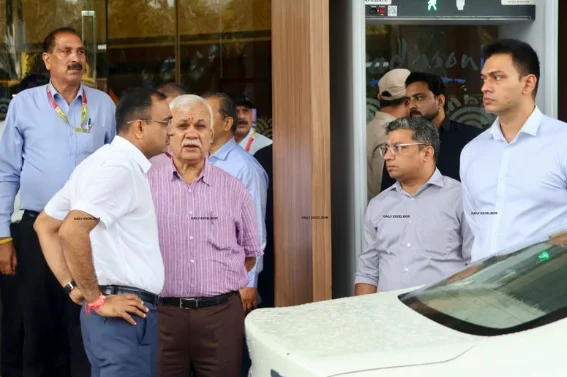
JAMMU, Aug 11: A high-level government-appointed committee examining demographic changes in the country on Tuesday visited Jagti township in Jammu, the largest designated settlement for displaced Kashmiri Pandits, and interacted with community representatives to hear their concerns and suggestions.
The panel also inspected a settlement housing Rohingya immigrants in the Narwal area and met delegations representing various communities, including Gorkhas and refugees from Pakistan-occupied Jammu and Kashmir (PoJK), officials said.
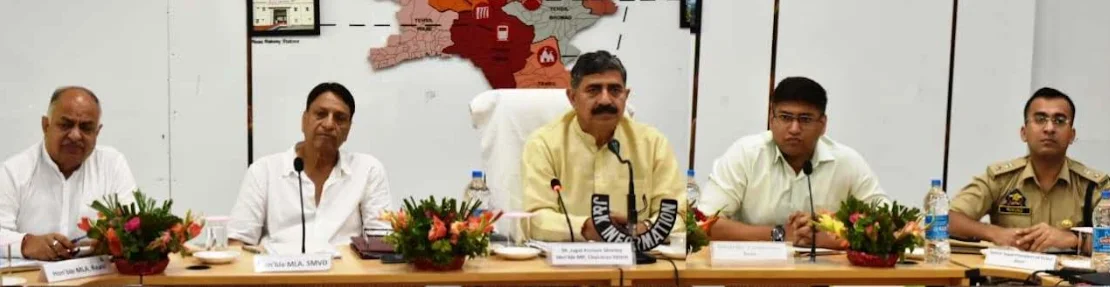
The four-member committee is on a three-day visit to Jammu. On Monday, it held discussions with senior government and police officials, including Chief Secretary Atal Dulloo and Director General of Police Nalin Prabhat.
The committee, headed by retired Justice Prabhakar Navlekar, was constituted by the Centre in May to examine demographic changes in different parts of the country arising from illegal immigration and other factors, and recommend measures to address them.
On the second day of its visit, the panel comprising Census Commissioner Mritunjay Kumar, retired IAS officer Durga Shankar Mishra, retired IPS officer Balaji Srivastava and economist Shamika Ravi reached Jagti township at Nagrota.
The members were given a traditional welcome by Kashmiri migrant families before holding a closed-door meeting with community representatives for nearly an hour.
Relief and Rehabilitation Commissioner (Migrants) Dr Arvind Karwani, who accompanied the committee, said the members interacted with residents and carefully listened to their concerns and suggestions.
He said more than 5,000 Kashmiri Pandit families reside in Jagti and that community representatives raised issues related to their return and rehabilitation.
"All the speakers presented their views before the committee, which heard them patiently and took note of their concerns. I hope these issues and suggestions will be reflected in the committee's report," Karwani said.
Social activist Sunil Pandita said the delegation was briefed about issues faced by Kashmiri Pandits since 1990, including water supply, roads, sanitation, housing, employment, implementation of relief schemes and their return to the Valley.
Vishva Ranjan Pandita, a lawyer, urged the Centre to recognise Kashmiri Pandits as victims and survivors of genocide and enact a specific genocide law. He also called for a safe and dignified return of the displaced community to their homeland, along with safeguards to prevent a recurrence of the events of 1990.
The committee subsequently visited the Rohingya settlement in Narwal and later met several other delegations at its hotel.
The government has said the panel will undertake a scientific assessment of demographic changes in different parts of the country, examine their causes, including illegal immigration, and recommend suitable policy, legislative and administrative measures.
According to government data cited in the report, more than 13,700 foreigners, including Rohingya Muslims and Bangladeshi nationals, are settled in Jammu and Samba districts, with their population having increased by over 6,000 between 2008 and 2016.
In March 2021, police had identified more than 270 Rohingyas, including women and children, living illegally in Jammu city during a verification drive and lodged them at a holding centre inside Kathua Sub-Jail.