Supreme Court Affirms Right to Protest, Says Agitation Doesn't Justify Police Excesses
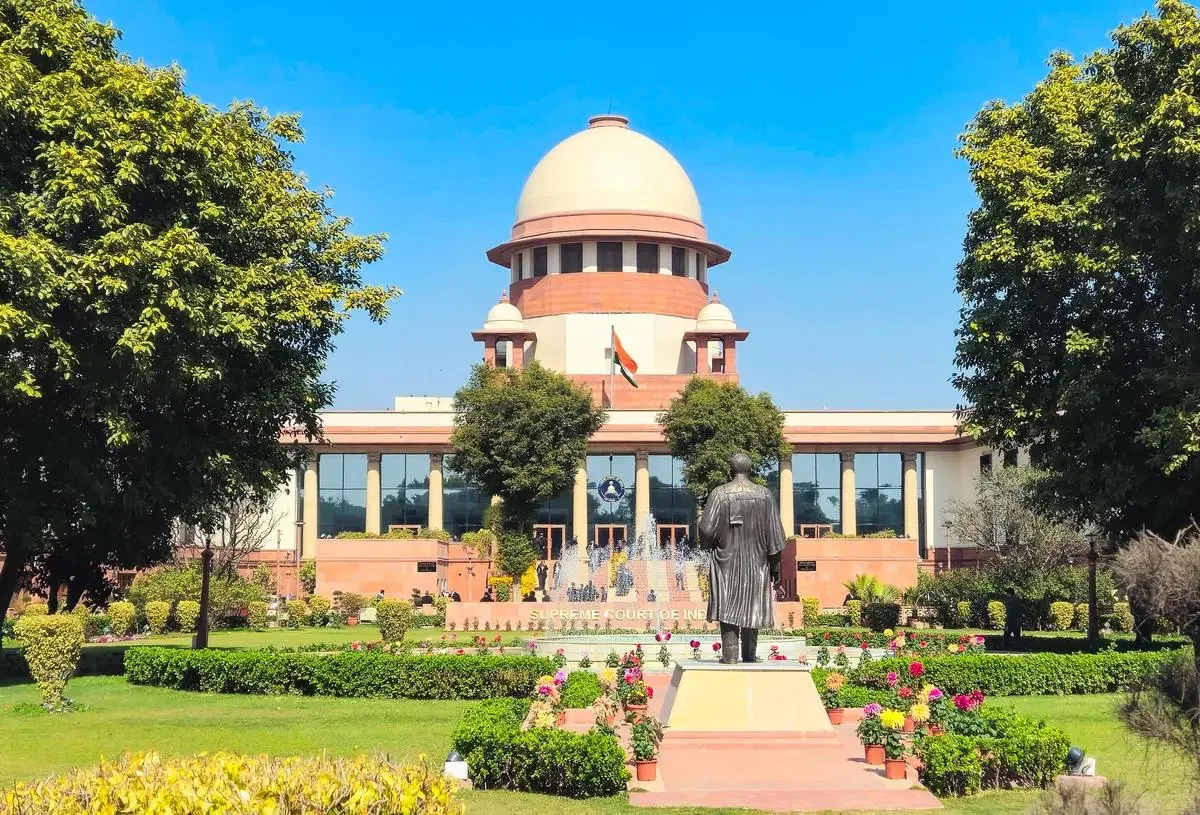
New Delhi, Jul 27: Police excesses or a 'lathi charge' cannot be justified merely because there is an agitation, the Supreme Court said on Monday while observing that the right to peaceful protest is "absolutely guaranteed".
A bench headed by Chief Justice Surya Kant also said it will hear on Tuesday a batch of pleas alleging police excesses against students protesting over exam irregularities and the NEET paper leak during the just concluded agitation spearheaded by the Cockroach Janta Party (CJP).
Besides, the bench, also comprising Justices Joymalya Bagchi and V Mohana, agreed to take up a separate plea filed by a few family members of those police personnel who were attacked during the protest along with other listed petitions.
The CJP-led march on July 20 in Delhi saw clashes between protesters and security personnel, who used lathis and teargas shells to disperse crowds attempting to move towards Parliament.
“The right to peaceful protest is absolutely guaranteed. That cannot be denied. Merely because there is agitation cannot justify police excesses,” the CJI said.
“If there is excess committed, it should be independently examined. It's not only a case of Delhi. Uniformity in protocol required... Discipline is integral to the democratic process," the bench observed.
The life of every individual irrespective of who they are is important, the bench asserted when a lawyer said police personnel were also beaten up.
"Injury to individuals, be it to policemen or (students), is of equal concern. We may call upon the state to concern why adequate equipment is not given to police to handle such...they should have helmets," Justice Bagchi said.
"Just because there is agitation does not mean there is ‘lathi charge’... self-evolved discipline is needed which is essential to democratic process,” the CJI said and urged parties to assist the bench.
Solicitor General Tushar Mehta, appearing for the Centre, said he will assist the court dispassionately.
During a brief hearing, lawyer Fauzia Shakil said police in Bihar allegedly used AK-47 on protestors.
Senior advocate Vikas Singh added that Bihar had also seen a lot of attacks on students.
Earlier, the top court had agreed to hear on Monday the pleas alleging police excesses against protesting students.
One petition seeks nationwide guidelines to regulate police action during public protests, including a prohibition on the deployment of plainclothes personnel for crowd-control duties, safeguards on the use of prohibitory orders under Section 163 of the Bharatiya Nagarik Suraksha Sanhita (BNSS), and an independent probe into the police action during the July 20 protest in Delhi.
Filed by Shailendra Mani Tripathi through advocate-on-record Chand Qureshi, the plea has made the Centre, the Delhi government, the police commissioner and all states and union territories as respondents.
It seeks enforcement of fundamental rights under Articles 14, 19 and 21 of the Constitution. It alleges that the demonstration at Delhi on July 20 was met with heavy police deployment, barricading, teargas, baton charges and mass detentions, resulting in injuries to at least 60 protesters.
It also alleges assaults, gender-based misconduct against female protesters and the use of force by unidentified or plainclothes personnel.
The student-led protests, which spread to several cities, were centred around the resignation of Union Education Minister Dharmendra Pradhan.
The agitation, which started in Jantar Mantar on June 20, was called off on Saturday after Pradhan resigned and the government accepted its other demands.
On July 22, the Delhi High Court sought responses from the Centre and the Delhi Police on two separate pleas alleging excessive use of force against protesters during the July 20 march to Parliament.
The high court had directed the authorities to preserve all relevant records in relation to the police action, including CCTV camera footage and any videography.