Industry Affirms E20 Petrol Is Safe For All Vehicles, Supports Ethanol Drive For Energy Security
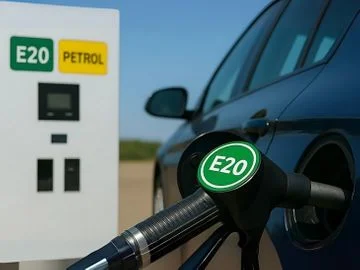
New Delhi, July 5: Industry leaders on Saturday sought to dispel concerns over the use of 20 per cent ethanol-blended petrol (E20), asserting that the fuel has undergone extensive scientific testing, is safe for both new and older vehicles, and plays a crucial role in reducing India’s dependence on imported crude oil.
Addressing a press conference at the National Media Centre, former Engineers India Ltd Chairman and Managing Director Vartika Shukla said E20 fuel was introduced in a phased manner after rigorous testing on two-wheelers and four-wheelers ahead of the nationwide rollout linked to the 2030 ethanol blending target.
She described E20 as a major step towards decarbonisation, adding that any impact on engine performance would be minimal and largely dependent on driving habits. Shukla also noted that the Ethanol Blended Petrol (EBP) programme, launched in 2018, was developed through extensive consultations with stakeholders and that oil marketing companies adhere to prescribed quality standards.
“There is absolutely no gap in the scientific methodology used to determine these standards,” she said.
Maruti Suzuki India Senior Executive Officer (Corporate Affairs) Rahul Bharti said owners of vehicles manufactured before 2023, when E20-compatible vehicles became mandatory, need not worry about using the higher ethanol blend.
“We have tested E10 cars, which were prevalent before 2023, on E20 fuel across all parameters, and we have not found anything of concern,” Bharti said.
He added that the company observed no significant issues related to wear and tear, corrosion, or the lifespan of engine components exposed to E20 fuel.
Toyota Kirloskar Motor Country Head and Executive Vice President (Corporate Affairs and Governance) Vikram Gulati described ethanol as a cleaner-burning, high-performance fuel that can significantly strengthen India’s energy security by reducing reliance on imported oil.
Referring to recent disruptions in global energy supplies, Gulati said the developments served as a reminder of India’s vulnerability due to its dependence on energy imports.
He further noted that ethanol, produced from plant-based feedstock, is a “zero-carbon fuel” that has been used for years in high-performance applications, including motor racing. Expanding ethanol usage, he said, would not only improve the country’s energy security but also create additional income opportunities for farmers by increasing demand for agricultural feedstock used in ethanol production.