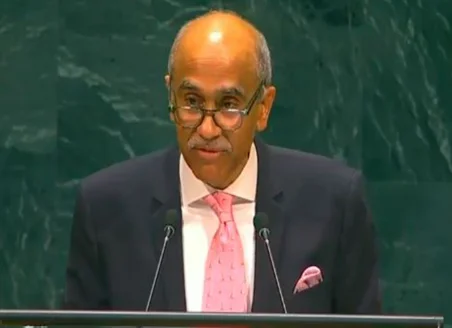
United Nations, October 27: India has strongly advocated equal rights for all permanent members of a reformed United Nations Security Council (UNSC), warning that creating a new category of permanent members without veto powers would effectively leave them with “second-class” status.
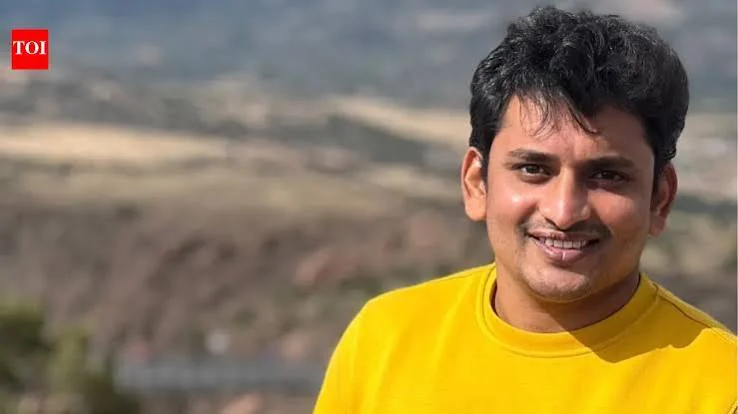
India’s Permanent Representative to the United Nations, Ambassador Harish Parvathaneni, made the remarks on Monday while addressing an Intergovernmental Negotiations (IGN) plenary session of the UN General Assembly on the question of veto powers.
Parvathaneni reiterated India’s position that all permanent members of a reformed Security Council must have veto powers as long as the provision continues to exist. He emphasised that fairness and justice require equal rights and responsibilities for every permanent member.
He argued that expanding the Council by introducing long-term members without veto powers would not fundamentally change the existing decision-making structure, leaving the five current permanent members in a dominant position.
The UNSC currently comprises 15 members, including five permanent members—China, France, Russia, the United Kingdom and the United States—who hold veto powers. The remaining 10 members are elected for two-year terms.
India has long called for comprehensive reform of the Security Council, including an expansion of both permanent and non-permanent membership. New Delhi maintains that the Council, established in 1945, must be restructured to reflect contemporary geopolitical realities and provide more equitable representation to the international community.
India has also argued that reform efforts focused solely on increasing non-permanent membership would fall short of meaningful change.
Alongside its campaign for a permanent seat, India is seeking election to a non-permanent seat for the 2028–29 term. The election is scheduled for June next year, with India and Tajikistan competing for the seat allocated to the Asia-Pacific Group.
India last served as a non-permanent member of the Security Council during 2021–22, marking its eighth term on the body. Its previous terms were 1950–51, 1967–68, 1972–73, 1977–78, 1984–85, 1991–92 and 2011–12.