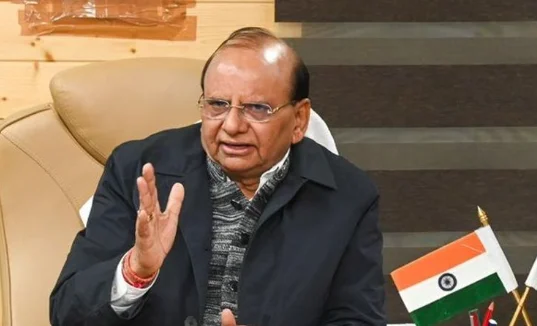
LEH, SEPTEMBER 4: Lieutenant Governor of Ladakh Vinai Kumar Saxena on Friday approved the Ladakh Autonomous Hill Development Councils (Nautor Regularisation) Rules, 2026, paving the way for granting proprietary rights to eligible occupants of Nautor land across the Union Territory.
The new Rules provide a comprehensive framework for granting ownership rights over up to 10 acres of eligible Nautor land to genuine occupants in all seven districts of Ladakh. Nautor holdings beyond 10 acres may be allotted on a leasehold basis as prescribed under the Rules.
The Rules introduce a one-time regularisation mechanism for Nautor land occupied before October 27, 2020, the date on which the J&K Tenancy Act, 1980 was repealed. Possession acquired after the cut-off date will not be eligible for regularisation.
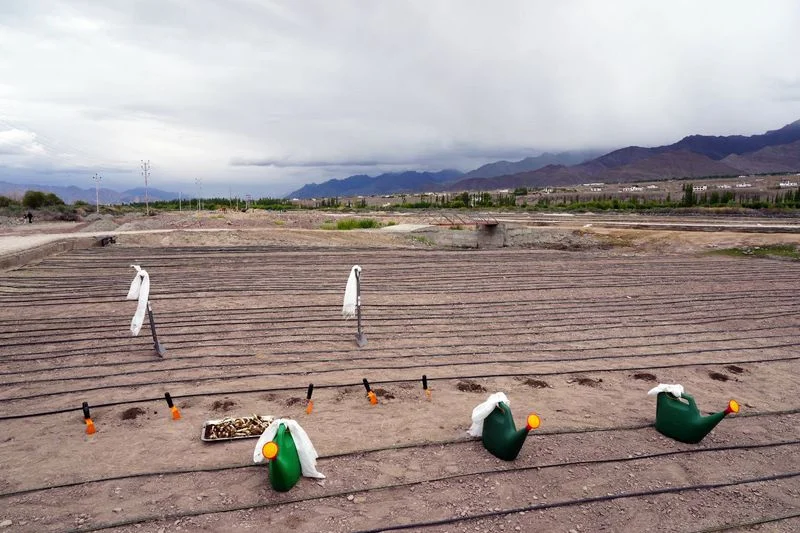
Nautor land refers to barren or wasteland owned by the Government and historically allotted to individuals for cultivation or other productive purposes. More than 60,000 acres of land in Ladakh is currently recorded as Nautor holdings in revenue records.
The new framework seeks to address the long-standing absence of uniform legal provisions governing Nautor land. Officials said the lack of proprietary rights had limited the ability of genuine holders to use the land as a financial asset, including for securing bank loans, while also creating scope for disputes and unauthorised claims over government and Council land.
Under the Rules, the authority to allot Nautor land has been vested in the Ladakh Autonomous Hill Development Councils (LAHDCs) in all seven districts.
LG Saxena said the Rules would provide legal certainty to genuine Nautor holders, ensure transparency and accountability in the regularisation process and establish uniform procedures across Ladakh.
He said the framework would also protect land vested in the LAHDCs from encroachment and unauthorised claims.
“The Nautor issue has a deep historical connection with the lives and livelihoods of the people of Ladakh. For generations, our people have worked hard to bring barren and waste land under cultivation in one of the most challenging agricultural environments in the country,” Saxena said.
He added that the Rules would provide a transparent mechanism to resolve the long-pending issue and enable genuine landholders to use their holdings as financial assets, including for obtaining bank loans.
The Rules will be placed in the public domain for two weeks of consultation before their final notification.
Under the proposed framework, eligible Nautor holders may receive proprietary rights for up to 10 acres, with the amount payable linked to the market rate notified by the Administration for the concerned revenue village. For holdings exceeding 10 acres, leasehold rights may be granted, with the premium fixed at 80 per cent of the notified market rate.
For Gair Mustaqil holdings, field verification by revenue authorities will be mandatory to establish the identity of the occupant, area under occupation, nature and extent of cultivation and date of possession.
Regularisation will be considered only if the occupation existed before October 27, 2020. Abandoned land and land found to have been encroached upon will remain ineligible and may be subject to eviction.
The Rules also provide that eligible land regularised under the framework may be mortgaged with scheduled banks, financial institutions and Government-backed lending agencies for land development.
In municipal areas, planning areas and areas covered by Master Plans, Zonal Plans or Development Authorities, land use will have to comply with applicable planning regulations.
All regularisations and allotments will remain subject to periodic review and audit. Cases involving violations, misrepresentation, concealment of facts, non-utilisation, unauthorised transfer or breach of conditions may result in cancellation or resumption of the land.