Ladakh Bans Chemical Fertilisers to Become India’s Largest Organic Region
Leh, Jul 18: The Ladakh Administration has imposed a complete ban on the procurement, distribution, sale, marketing and use of chemical and synthetic fertilisers for agricultural purposes across the Union Territory, following directions from Lieutenant Governor Vinai Kumar Saxena.
The order, which comes into immediate effect, aims to transform Ladakh into India’s largest certified organic region by promoting sustainable farming and protecting its fragile Himalayan ecosystem. Violations of the ban will attract a minimum fine of ₹10,000.
According to the official order, the prohibition has been enforced to safeguard Ladakh’s organic certification, conserve soil and water resources, encourage sustainable agricultural practices and ensure the long-term resilience of the region’s farming sector.
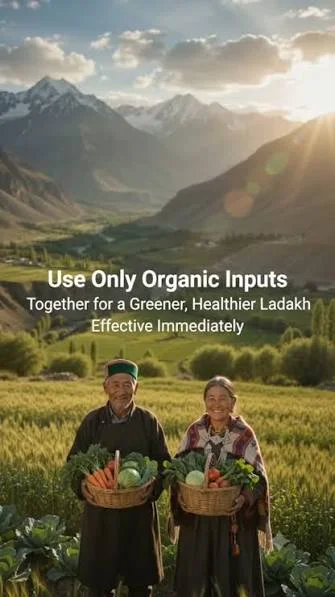
Farmers and agricultural units have been advised to use only organic inputs, including on-farm and off-farm organic fertilisers, for cultivation.
Lieutenant Governor Saxena said the decision marks a transformative step towards making Ladakh a fully organic Union Territory.
“Ladakh has been blessed with a pristine environment, rich biodiversity and traditional farming practices that have remained largely free from excessive chemical intervention. This initiative will protect our fragile Himalayan ecosystem, enhance the value of Ladakh’s organic produce, improve farmers’ incomes through premium markets and establish Ladakh as a global model of environmentally sustainable high-altitude agriculture,” he said.
The move aligns with Prime Minister Narendra Modi’s vision of promoting natural farming, environmental conservation, improved soil health and climate-resilient agriculture. During the recent NITI Aayog Governing Council meeting, the Prime Minister had urged States and Union Territories to encourage organic farming.
Officials said 207 revenue villages in Ladakh have already been brought under organic certification as part of the Union Territory’s ongoing efforts to become a fully certified organic region.
The Agriculture Department has been designated as the nodal agency for implementing the ban, while the Departments of Horticulture, Cooperatives, and Rural Development & Panchayati Raj will facilitate the transition through awareness campaigns, capacity-building initiatives and improved availability of organic inputs. Enforcement agencies have been directed to ensure strict compliance with the new regulations.