Supreme Court Seeks Centre, CBSE, NCERT Replies On Challenge To Three-Language Rule For Class 9
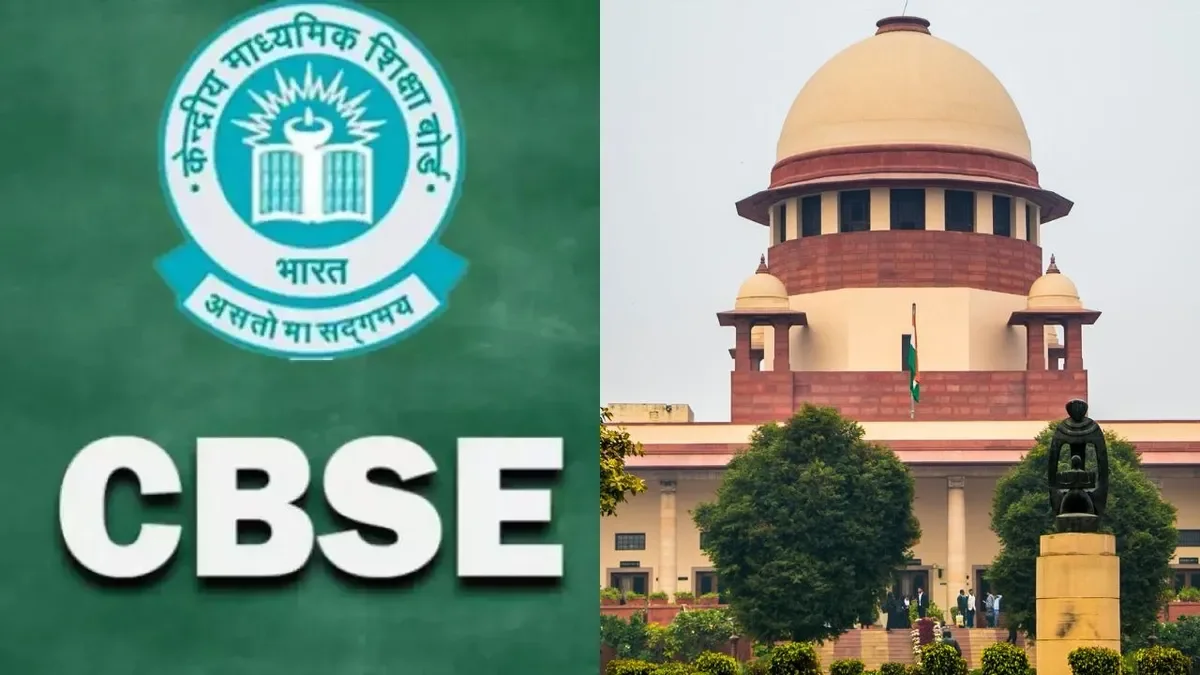
New Delhi, July 14: The Supreme Court on Tuesday sought responses from the Centre, CBSE and NCERT on pleas challenging the board’s policy making the study of three languages, including two Indian languages, mandatory for Class 9 students.
A bench headed by Chief Justice Surya Kant, along with Justices Joymalya Bagchi and V. Mohana, issued notices to the authorities and asked them to file their replies within 10 days. The matter will be heard on July 29.
The petitions, filed by Amandeep Kaur and Arpan Roy Choudhury, challenge the CBSE’s language policy, with petitioners arguing that its implementation creates practical difficulties for schools, including shortages of textbooks, teachers and infrastructure.
Senior advocates Anand Grover and Gopal Sankaranarayanan, appearing for the petitioners, claimed that the policy was being implemented without adequate preparation and could conflict with provisions of the Right to Education (RTE) Act.
During the hearing, concerns were raised over the availability of textbooks in multiple languages and the shortage of teachers required to teach additional languages.
The challenge relates to a CBSE circular making three languages (R1, R2 and R3) compulsory for Class 9 from July 1, 2026, with at least two being native Indian languages.
The policy is part of CBSE’s alignment with the National Education Policy (NEP) 2020 and the National Curriculum Framework for School Education (NCF-SE) 2023.
CBSE has said that students choosing a foreign language can opt for it only as the third language after studying two Indian languages, or as an additional fourth language. The board has also clarified that no Class 10 board examination will be conducted for the third language (R3) to reduce pressure on students.