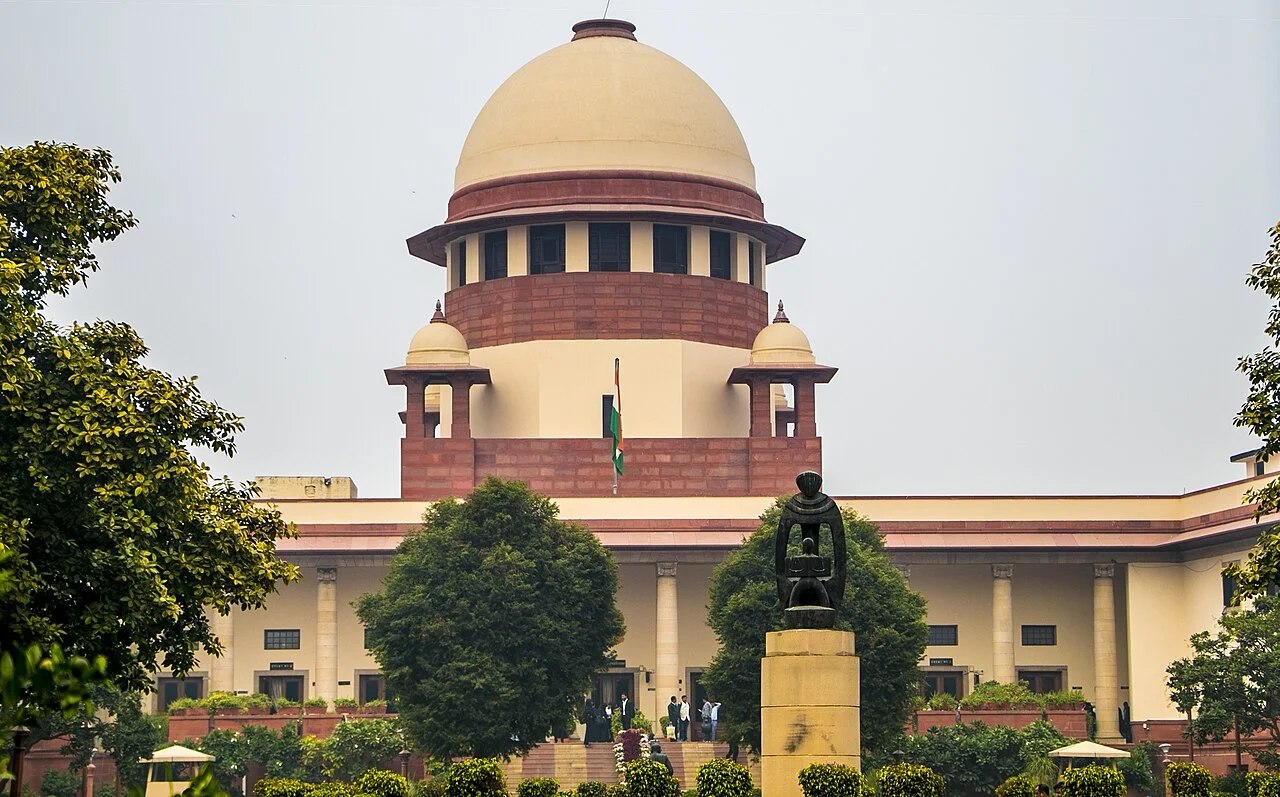
NEW DELHI: The Supreme Court on Monday directed the Jammu and Kashmir administration to initiate land acquisition proceedings and pay compensation and rental dues to a landowner whose family’s property was allegedly taken over without acquisition for a police station in Kangan, Ganderbal, in 1953.
A bench comprising Chief Justice Surya Kant and Justices Joymalya Bagchi and V Mohana said the administration could not be allowed to benefit from an illegal takeover merely because several decades had passed.
The land, measuring seven kanals and 18 marlas, was allegedly taken over for construction of a police station without any formal acquisition proceedings or payment of compensation.
The court was hearing a plea filed by Abdul Rashid Wani, represented by advocate Mahfooz Ahsan Nazki, challenging a 2022 judgment of the Jammu and Kashmir and Ladakh High Court.
The High Court had dismissed Wani’s petition seeking restoration of the land or compensation, citing a delay of nearly 68 years in approaching the court.
The Supreme Court, however, said the delay should not deprive the petitioner of relief for state action that was allegedly illegal. At the same time, it observed that fresh acquisition proceedings could not be ordered retrospectively from 1953 due to the passage of nearly seven decades.
The bench directed the land acquisition officer to commence acquisition proceedings from the date Wani approached the High Court in 2021.
It also directed the officer to calculate rental compensation payable to Wani for the use and occupation of the land from 1953.
The Supreme Court said the final amount towards land acquisition and rentals would be determined by the High Court.
Wani had claimed that his predecessors owned the land bearing Survey No. 525 at Mouza Kangan in Ganderbal district. According to his plea, the property was taken over for a police station without formal acquisition or compensation.
He had sought restoration of possession or, alternatively, acquisition of the land and payment of compensation or rental dues for its use since 1953.
The High Court had earlier noted that the petitioner failed to adequately explain the prolonged delay in seeking legal remedies. It also rejected his contention that his father’s illiteracy prevented the family from approaching the courts earlier.
The J&K administration had opposed the plea, arguing that the police department had remained in peaceful possession of the property since 1953 and that records relating to the land were difficult to trace after such a long period.
The Supreme Court’s direction provides relief to the petitioner by recognising his claim for compensation and rentals despite the prolonged delay.