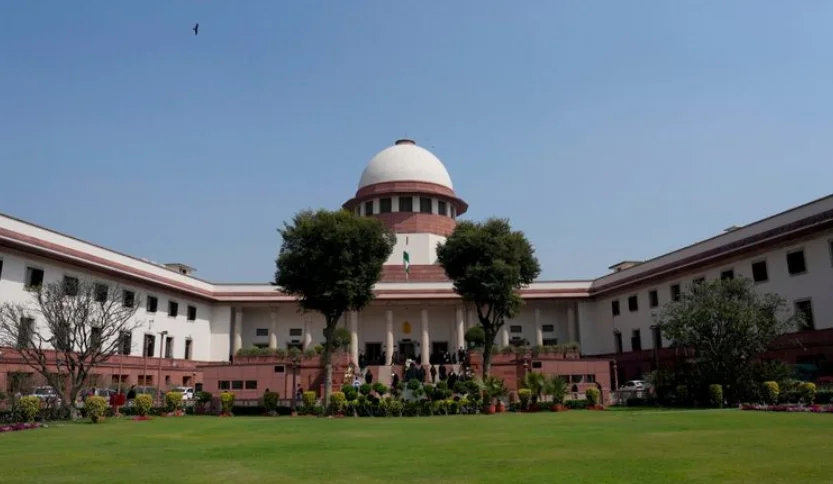
NEW DELHI, October 29: The Supreme Court on Thursday questioned the Centre over the availability of fuel supply if vehicles running on 100 per cent ethanol are permitted, seeking clarity on how the government plans to meet the potential demand.
A bench comprising Justices M M Sundresh and Prasanna B Varale raised the question while hearing petitions concerning ethanol allocation for the Ethanol Supply Year (ESY) 2025-26.
Referring to recent media reports, the bench asked how the supply would be managed if vehicles capable of running entirely on ethanol were allowed on Indian roads.
Responding to the court, Attorney General R Venkataramani said such a move would require “large scale manufacturing re-arrangements”.
Centre's Ethanol Policy Under Focus
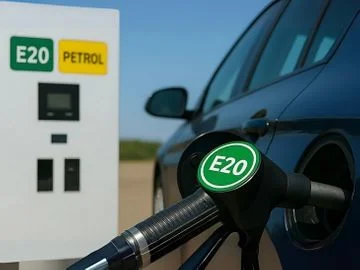
The court's observations came after the Ministry of Road Transport and Highways notified amendments to the Central Motor Vehicles Rules, 1989, on October 26, allowing flex-fuel vehicles designed to run on ethanol blends of up to E100, which is nearly pure ethanol.
However, Union Petroleum and Natural Gas Minister Hardeep Singh Puri said on October 27 that the government had no immediate plans to increase ethanol blending in petrol beyond the existing 20 per cent level.
Flex-fuel vehicles are designed to operate on different proportions of ethanol and petrol. These include E85, comprising 85 per cent ethanol and 15 per cent petrol, and E100, which contains nearly 100 per cent ethanol.
The recent amendments update emission certification provisions by expressly including E100 alongside E85.
Supreme Court Highlights Farmers' Interests
During the hearing, the bench emphasised that ethanol-related policies should be assessed not only from an environmental perspective but also in terms of their broader public interest and impact on farmers.
Justice Sundresh said empowering farmers and the rural population was an important aspect that needed greater attention in the ongoing debate.
The bench observed that the benefits of ethanol-related initiatives should also reach ordinary citizens, particularly those living in villages.
The Attorney General assured the court that he would address the concerns relating to farmers during his submissions. Lawyers appearing in the matter also argued that the promotion of ethanol could benefit farmers and that their interests had been considered in the Centre's policy framework.
The Supreme Court subsequently scheduled the matter for hearing next month.
Dispute Over Ethanol Allocation
The case also concerns the allocation of ethanol for ESY 2025-26. On June 30, the Supreme Court had ordered maintenance of the status quo on a Karnataka High Court direction concerning enhanced ethanol allocation.
The apex court was hearing a plea filed by an oil marketing company, which argued that the High Court's order could disrupt the national policy of blending 20 per cent ethanol with petrol.
The Karnataka High Court had directed Bharat Petroleum Corporation Limited, Hindustan Petroleum Corporation Limited and Indian Oil Corporation Limited to consider a representation from a dedicated ethanol manufacturer seeking an increase in its allocation for the supply year.
The High Court had observed that dedicated ethanol plants, established under government policy and contractually committed to supplying oil marketing companies, should not be denied preferential allocation benefits contemplated under long-term offtake agreements.
The Supreme Court's latest observations bring renewed attention to the questions of ethanol availability, manufacturing capacity, farmers' interests and the implementation of India's ethanol-blending policy.