VADIA, GUJARAT, SEP 20: In Gujarat’s Vadia village, families are attempting to break a generations-old cycle of women being pushed into the sex trade by arranging engagements and marriages for girls at an early age.
Located in Banaskantha district, around 200 km from Ahmedabad, Vadia has long carried the derogatory label of a “prostitute village”. According to local residents and social workers, women from the traditionally nomadic Sarania community have historically been involved in the sex trade, while men often acted as intermediaries.
Residents say the practice continues in parts of the village. Men allegedly approach potential customers along the Palanpur-Tharad highway and arrange meetings with women involved in the trade.
Against this backdrop, some families have begun arranging engagements for their daughters, believing that being engaged or married will protect them from being pushed into prostitution.
A 19-year-old woman from the village, whose mother and grandmother were involved in the sex trade, told PTI that her family arranged her engagement when she was 11. She later married at 18 and is now studying nursing away from the village.
She said her mother wanted to ensure that she would not be forced into the same circumstances.
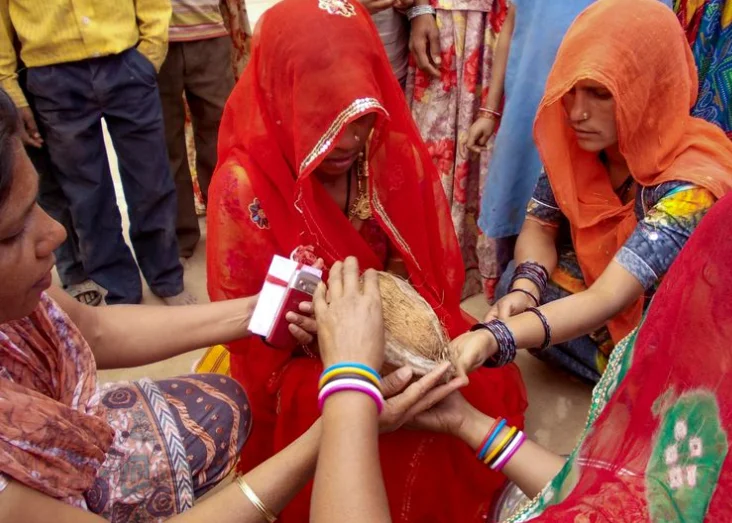
Social workers and some families have organised collective engagements and marriages for girls, with arrangements involving families from nearby villages and relatives. Villagers have also developed an informal practice under which girls who are engaged or married are not expected to enter the sex trade.
However, the practice has also raised concerns because child marriage is prohibited under Indian law.
The shift began gaining momentum in 2012, when the first mass marriage ceremony was organised in the village with support from non-governmental organisations. Since then, similar marriage and engagement programmes have been organised periodically.
Mittal Patel, founder of Vicharta Samuday Samarthan Manch (VSSM), said the organisation has worked with families to discourage the practice of pushing girls into prostitution and promote education and alternative livelihoods.
According to Patel, around 90 of 160 families involved in the initiative have given up the sex trade. Efforts have also included improving access to farming, reviving borewells and lakes and providing interest-free loans to help families establish alternative sources of income.
Some former sex workers have also worked to ensure that their children do not enter the trade.
Chandra Sarania, who said she was pushed into prostitution at the age of 15, now runs a small dairy business. She said she arranged her daughter's engagement at 12 and marriage at 18 in an effort to provide her with a different future.
Local residents say stigma remains a major obstacle, particularly when families seek marriage alliances outside the village.
The Sarania community has a long history of nomadic movement, and local accounts connect it with groups that travelled with the forces of Maharana Pratap. According to community folklore, women provided entertainment for troops while men worked with weapons. After Independence, changing circumstances and a lack of livelihood opportunities are said to have contributed to the community's involvement in the sex trade.
Today, residents and social workers are seeking to change that legacy through education, alternative employment and efforts to prevent girls from being pushed into prostitution, while the issue of early engagement and marriage remains a complex and legally sensitive concern.