India's Partition Biggest Historical Blunder, PoJK Must Be Retrieved: Dr Jitendra Singh
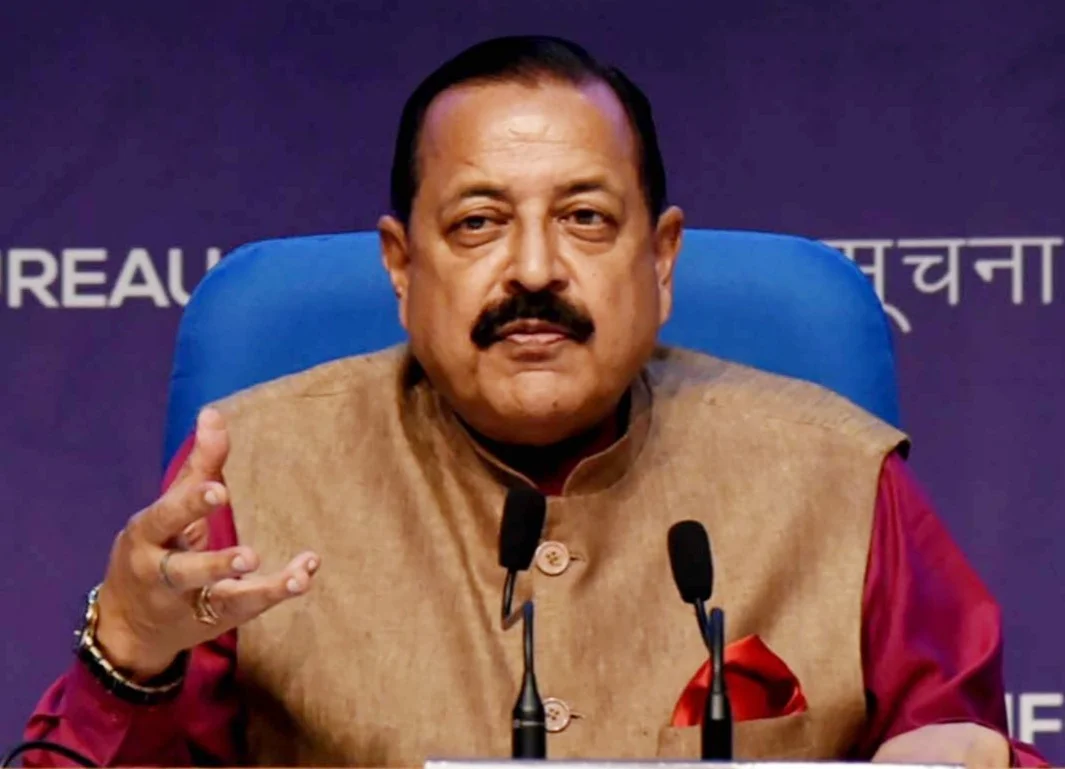
NEW DELHI, Jul 26: Union Minister of State (Independent Charge) for Science and Technology, Dr Jitendra Singh, on Saturday described India's Partition as the "greatest blunder of history" and asserted that the retrieval of Pakistan-occupied Jammu and Kashmir (PoJK) remains the only pending issue between India and Pakistan.
Addressing the 27th Kargil Vijay Diwas commemoration organised by the Jammu Kashmir Peoples' Forum in collaboration with the POJK Youth Forum at the Kashmiri Cultural Centre in New Delhi, the Minister said India's national security doctrine has undergone a decisive transformation under Prime Minister Narendra Modi's leadership, shifting from a reactive approach to one of preparedness and decisive action.
The event was attended by Member of Parliament Bansuri Swaraj as the Guest of Honour, while Kargil War veteran Col. K.K. Sharma (SC, SM & Bar) presided over the function. Organised under the leadership of Mahinder Mehta, Convenor of the Jammu Kashmir Peoples' Forum, the programme paid tribute to the soldiers who laid down their lives during the 1999 Kargil War.
Describing Kargil Vijay Diwas as a symbol of courage, sacrifice and national resolve, Dr Singh said the victory reflected the unwavering commitment of the Indian Armed Forces to protect the country's sovereignty and territorial integrity. He added that the lessons of Kargil remain relevant as India continues to face evolving security challenges.
Tracing the origins of the conflict, the Minister said the Kargil War was part of a larger historical sequence beginning with Partition, which he termed the "greatest blunder of history." He said Partition caused immense human suffering, displaced millions and led to decades of conflict, including the wars of 1947, 1965, 1971 and Kargil, besides cross-border terrorism and proxy warfare. He also referred to the displacement of Kashmiri Pandits as one of independent India's gravest humanitarian tragedies.
Highlighting changes in India's security policy over the past decade, Dr Singh said the Government has adopted a zero-tolerance approach towards terrorism, strengthened border management and developed a proactive security strategy capable of responding firmly to external threats.
The Minister also underlined the close link between peace and development, pointing to the rapid transformation witnessed in Jammu and Kashmir through major infrastructure projects, including railway connectivity to the Kashmir Valley, the Chenab Rail Bridge, AIIMS institutions, irrigation projects and other development initiatives.
He further said India's growing self-reliance in defence manufacturing has strengthened national security, with indigenous production expanding significantly and the country emerging as a notable exporter of defence equipment.
Referring to Pakistan-occupied Jammu and Kashmir, Dr Singh said the pace of development in Jammu and Kashmir has become a source of inspiration for people living across the Line of Control. Recalling the unanimous Parliamentary Resolution passed in 1994, he reiterated that PoJK is an integral part of India and maintained that its retrieval remains the only unresolved issue between India and Pakistan.
Paying tribute to the martyrs of the Kargil War, Dr Singh urged the younger generation to draw inspiration from their courage, patriotism and sacrifice, saying their legacy should motivate every Indian to contribute towards building a stronger, secure and self-reliant nation.