By Bharat Nanda
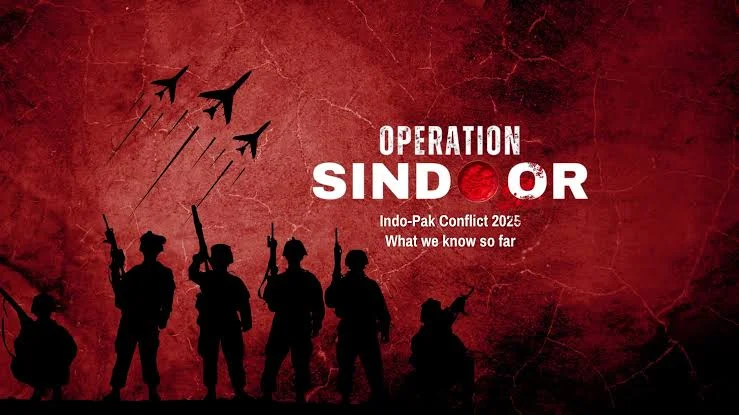
Wars do not end when the guns fall silent. They continue through official statements, television studios, diplomatic conversations and competing accounts of what happened on the battlefield. Pakistan has understood this for decades. Its military establishment has repeatedly used selective disclosures, controlled media coverage and aggressive propaganda to turn operational setbacks into supposed victories. Operation Sindoor, however, has proved far more difficult to conceal behind this familiar machinery.
The unusually sharp reaction of Pakistan’s Inter-Services Public Relations to Declassified: Operation Sindoor is therefore revealing. The documentary presented India’s account of the military operation through strategic assessments, operational details and interviews with senior Indian decision-makers. Pakistan could have ignored it as an Indian production intended primarily for an Indian audience. Instead, its military media wing issued an elaborate rebuttal, accused the programme of distorting history and revived its own claims about the confrontation.
The intensity of the response suggests that the documentary touched a raw nerve.
Pakistan’s problem is not simply that India has produced a film about Operation Sindoor. Its real difficulty is that the documentary places India’s account before a much wider audience in a coherent and accessible form. Information that was previously scattered across official briefings, military presentations and public statements has been brought together into a single narrative. That narrative portrays India as a country that absorbed a brutal terrorist attack, identified the infrastructure supporting those responsible and responded with deliberate, precise and calibrated force.
For Pakistan’s military establishment, this is deeply uncomfortable.
Islamabad had tried to describe the confrontation as an uncomplicated Pakistani victory. Its official narrative depended on shifting attention away from the terrorist infrastructure targeted by India and towards sensational claims about aircraft, escalation and battlefield success. The purpose was not merely to convince the world. It was even more important to reassure Pakistan’s domestic audience that the country’s military leadership had remained in complete control.
The documentary challenges that portrayal by returning attention to the sequence of events. The confrontation did not begin in a vacuum. Operation Sindoor followed the Pahalgam terrorist attack in which 26 civilians were killed. India’s response was initially directed at terrorist infrastructure, including facilities associated with Lashkar-e-Taiba and Jaish-e-Mohammed. India also made clear that its opening action had deliberately avoided Pakistani military installations.
That sequence matters because Pakistan would prefer the world to discuss the military exchange without discussing what caused it. By detaching Operation Sindoor from the Pahalgam massacre and the long history of terrorist organisations operating from Pakistani territory, Islamabad can attempt to portray itself as a victim of Indian aggression. Once the initiating act of terrorism and the infrastructure behind it are restored to the discussion, Pakistan’s narrative begins to weaken.
The documentary also raises a more serious institutional concern for Rawalpindi. It challenges the Pakistan Army’s monopoly over the interpretation of the confrontation.
For decades, the Pakistani military has dominated the country’s national security discourse. Its version of events is repeated by government representatives, amplified by television channels and protected from meaningful scrutiny. Tactical claims are elevated into articles of faith. Questions about damage, intelligence failures or the continued presence of internationally designated terrorist organisations are pushed out of public debate.
Operation Sindoor created circumstances in which that control became more difficult.