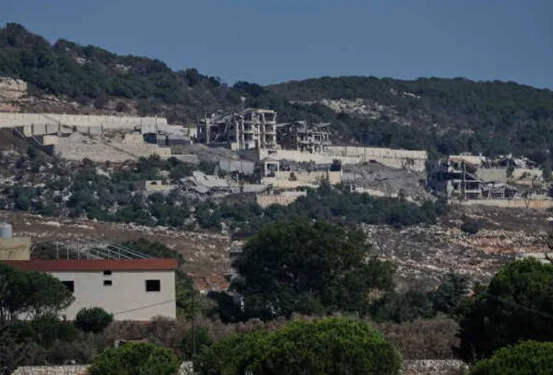
BEIRUT, Sept 5: Fighting between Israel and Hezbollah has intensified around a strategic hill in southern Lebanon, more than two months after a ceasefire halted much of the hostilities elsewhere in the country.
Ali Taher hill, overlooking parts of the southern city of Nabatiyeh and key roads in the region, has witnessed frequent Israeli shelling and airstrikes in recent weeks. Hezbollah has also repeatedly targeted Israeli forces in the area with drones.
The United States, which is mediating talks between Lebanon and Israel, had urged Hezbollah to hand over the hill to the Lebanese army as part of a broader plan to disarm the group and dismantle its military infrastructure. Hezbollah has rejected the proposal.
Under a framework agreement reached by Lebanon and Israel in June, Israel is to withdraw from Lebanese territory as Hezbollah is disarmed. Hezbollah was not part of those negotiations and has rejected calls to surrender its weapons in areas north of the Litani River, where Ali Taher is located.
The escalating confrontation over the hill could potentially widen the conflict in Lebanon and further complicate diplomatic efforts in the region.
On Thursday night, the Israeli military said it had established “operational control” over Ali Taher and a network of tunnels beneath it that it said were used by Hezbollah fighters and for storing weapons.
Israel's military said the underground network included command centres, weapons storage facilities, generators, living quarters, showers and a kitchen. It said troops had cleared the area of Hezbollah fighters and were working to neutralise the underground infrastructure.
However, the extent of Israeli control over the hill remains unclear. Lebanese state media reported that Israeli aircraft were still striking the area shortly before the Israeli military's announcement. Hezbollah has not issued an official response to Israel's claim.
Hezbollah Rejects Handover Proposal
Hezbollah has opposed transferring Ali Taher to the Lebanese army, arguing that Israel could subsequently take control of the site and demand the surrender of additional territory.
Israel occupied the hill for 18 years before withdrawing from Lebanon in 2000. Its strategic position gives it views over several villages and major routes leading to Nabatiyeh.
Hezbollah legislator Ihab Hamadeh questioned why Israeli forces continued attacking the hill if they had already secured control of the area. An Associated Press photographer visiting the nearby village of Kfar Rumman on Friday reported seeing no visible Israeli military presence on the hill.
The site, which is topped by a shrine dedicated to a Muslim scholar, lies north of the Litani River and has emerged as a key flashpoint since renewed fighting between Israel and Hezbollah.
Fighting Has Intensified In Recent Weeks
According to Nasser Khdour, a Middle East researcher with the Armed Conflict Location & Event Data Project (ACLED), Israel has been conducting military operations around Ali Taher since July.
Hezbollah official Mahmoud Qamati said in late August that the group's fighters were resisting Israeli attempts to capture the hill, although he played down its strategic importance.
“Ali Taher is important, but if it is lost it does not mean the end of Hezbollah,” Qamati said.
In mid-August, Israel carried out a series of airstrikes in southern Lebanon after describing them as retaliation for a Hezbollah drone attack on Ali Taher that seriously wounded three Israeli soldiers. The strikes killed 11 people, including women and children, according to Lebanese authorities, making them the deadliest since the ceasefire began.
On August 27, Israel again carried out airstrikes after saying Hezbollah had launched two explosive drones at Israeli troops in the area. One person was killed and six others were wounded, according to Lebanese authorities. Hezbollah did not claim responsibility for the attacks.
Lebanon Says Israel Is Blocking Army Deployment
Lebanon's Deputy Prime Minister Tarek Mitri said in late August that the Lebanese army was prepared to take control of Ali Taher.
He accused Israel of preventing the army from deploying there for political reasons ahead of Israel's October 27 national elections.
“The problem is not in the Lebanese army's readiness but in Israel's stance,” Mitri said.
Lebanese and Israeli officials are expected to meet in Rome later this month for negotiations.
Meanwhile, indirect contacts between the United States and Hezbollah are reportedly taking place, according to a Lebanese official who spoke on condition of anonymity. US Ambassador to Lebanon Michel Issa has said Washington is prepared to engage with Hezbollah if the group agrees to disarm.
However, Hezbollah is unlikely to make significant moves towards direct talks with Washington without approval from Iran, its main backer. Tehran has been seeking assurances that Israel would halt attacks on Hezbollah as part of any permanent regional settlement.
Ali Taher Could Open Route To Other Hezbollah Strongholds
The loss of Ali Taher could potentially give Israeli forces access towards Nabatiyeh and nearby areas, including Apple Province and Rihan Mountain, where Hezbollah has strengthened its presence since the late 1990s.
Israeli leaders have repeatedly pledged to keep troops in Lebanon and threatened to intensify military pressure until Hezbollah disarms.
Khdour said Israeli control of the area would represent an operational and military setback for Hezbollah, while also helping Israel protect communities in its northern region.
He said securing the site could strengthen Israel's position in any future negotiations over a withdrawal from Lebanon.