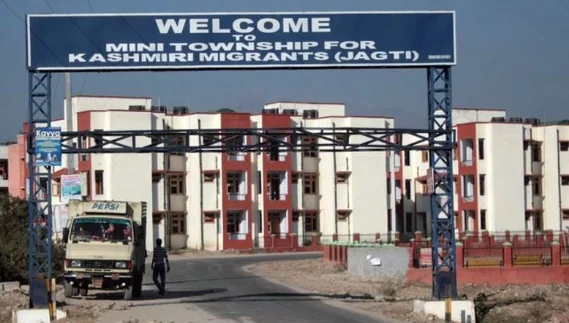
Jagti (Jammu), Aug 9: Hundreds of displaced Kashmiri Pandits living in Jagti township and other relief camps have described themselves as “political orphans”, alleging decades of neglect, unfulfilled rehabilitation promises and inadequate political representation.
Community members said political parties frequently highlight their displacement and grievances during election campaigns but fail to address their concerns once elections are over.
“Used by everyone, represented by none, this is the real tragedy,” said advocate Vishva Ranjan Pandita, a resident of Jagti camp. He alleged that the community had been pushed to the margins of political discourse despite its long-standing concerns.
Tito Ganju, chairman of Panun Kashmir, said Kashmiri Pandits were remembered by political parties mainly during election cycles.
“Kashmiri Pandits may have been made political orphans, but we are not destined to remain political orphans,” Ganju said, asserting that the community remains an integral part of Kashmir's civilisational and cultural history.
Residents also raised concerns over deteriorating infrastructure in migrant camps and delays in implementing rehabilitation and employment measures.
According to electoral data, 1,13,873 Kashmiri migrant electors were registered across the Srinagar, Baramulla and Anantnag-Rajouri Lok Sabha constituencies during the 2024 general elections. The figure included 56,290 male voters, 57,582 female voters and one transgender voter.
The number was higher than the approximately 99,000 migrant voters registered during the 2019 Lok Sabha elections and around 92,000 in 2014.
Some community leaders alleged that efforts to encourage displaced voters to transfer their registration back to their native places in Kashmir had further weakened their political representation.
Academician Dileep Kumar Kaul described the community as “real political orphans”, alleging a lack of political will to adequately address their concerns.
Vishva Ranjan Pandita said successive elections had brought promises and political speeches concerning the displaced community, but their issues often faded from public discourse after polling.
Social activist Bhushan Lal Bhat said Kashmiri Pandits should not be viewed merely as victims awaiting rehabilitation and argued that their political participation must be an integral part of any discussion on Kashmir's future.
Academician B L Kaul said the community's concerns extended beyond displacement, asserting that any proposed settlement must address their security, dignity and political rights.
Community leader Kuldeep Raina described the displacement as a “political rupture” and said any meaningful effort towards resolving issues related to Kashmir must restore political space, security and dignity for Kashmiri Pandits.
Activists also highlighted delays in employment and rehabilitation measures, including the implementation of migrant employment schemes.
Activist Sunil Pandita said the community had remained away from its ancestral homes for decades and alleged that the government had not filled the 6,000 migrant posts announced in 2009. He also claimed that housing for employees appointed under the Prime Minister's package in Kashmir remained incomplete.
Residents said they wanted concrete measures for rehabilitation, improved living conditions, political representation and protection of their rights rather than recurring assurances during election campaigns.