
JAMMU, Aug 10: A four-member government-constituted committee tasked with studying demographic changes across different parts of the country arrived in Jammu on Monday for a three-day visit, officials said.
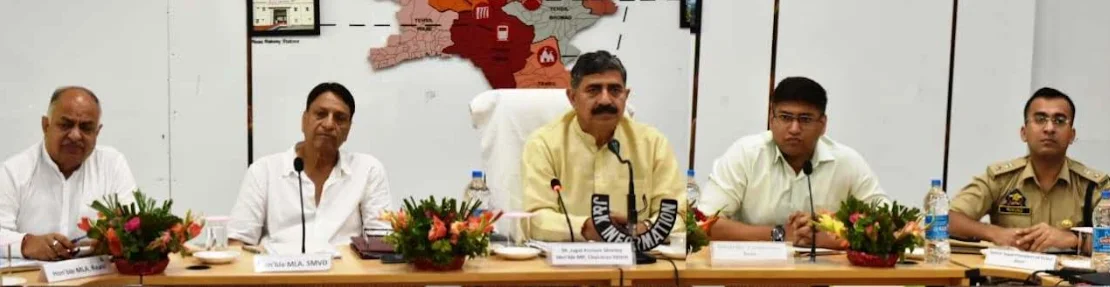
Soon after its arrival, Chief Secretary Atal Dulloo and Director General of Police (DGP) Nalin Prabhat met the committee at a hotel to discuss the panel’s assessment and ongoing consultations with senior officials.
Officials said a detailed presentation on Jammu and Kashmir’s demographic profile and changing population trends was made before the meeting with the Chief Secretary and DGP. The committee will continue its engagements in Jammu till August 12.
The panel is scheduled to visit several areas of Jammu, including settlements where Rohingya and Bangladeshi nationals are residing, as well as locations along the International Border that are considered sensitive from security and administrative perspectives.
The committee was constituted by the Centre in May under the chairmanship of retired Justice Prakash Prabhakar Navlekar to study demographic changes resulting from illegal immigration and other abnormal factors and recommend measures to address them.
Prime Minister Narendra Modi had announced the “High-Powered Demography Mission” in his Independence Day address on August 15 last year. The Union Cabinet subsequently approved the proposal on September 11.
Apart from the Census Commissioner, the committee comprises three experts — former IAS officer Durga Shankar Mishra, former IPS officer Balaji Srivastava and economist Shamika Ravi. The Joint Secretary (Foreigners-I) in the Ministry of Home Affairs is the Member Secretary.
The committee’s visit to Jammu is part of its broader exercise to gather inputs and assess demographic trends, particularly in areas affected by migration and illegal immigration.
According to government data cited by officials, more than 13,700 foreign nationals, including Rohingya Muslims and Bangladeshi nationals, are settled in Jammu and Samba districts, with their numbers having increased by over 6,000 between 2008 and 2016.
In March 2021, police identified more than 270 Rohingyas, including women and children, during a verification drive in Jammu city and subsequently lodged them at a holding centre inside Kathua Sub-Jail.
The presence of illegal foreign nationals, particularly Rohingya and Bangladeshi nationals, has previously drawn concerns from political leaders and various organisations, who have called for their identification and deportation, citing security and demographic concerns.
The committee is expected to submit its findings and recommendations after completing its consultations and assessment of demographic trends in different parts of the country.