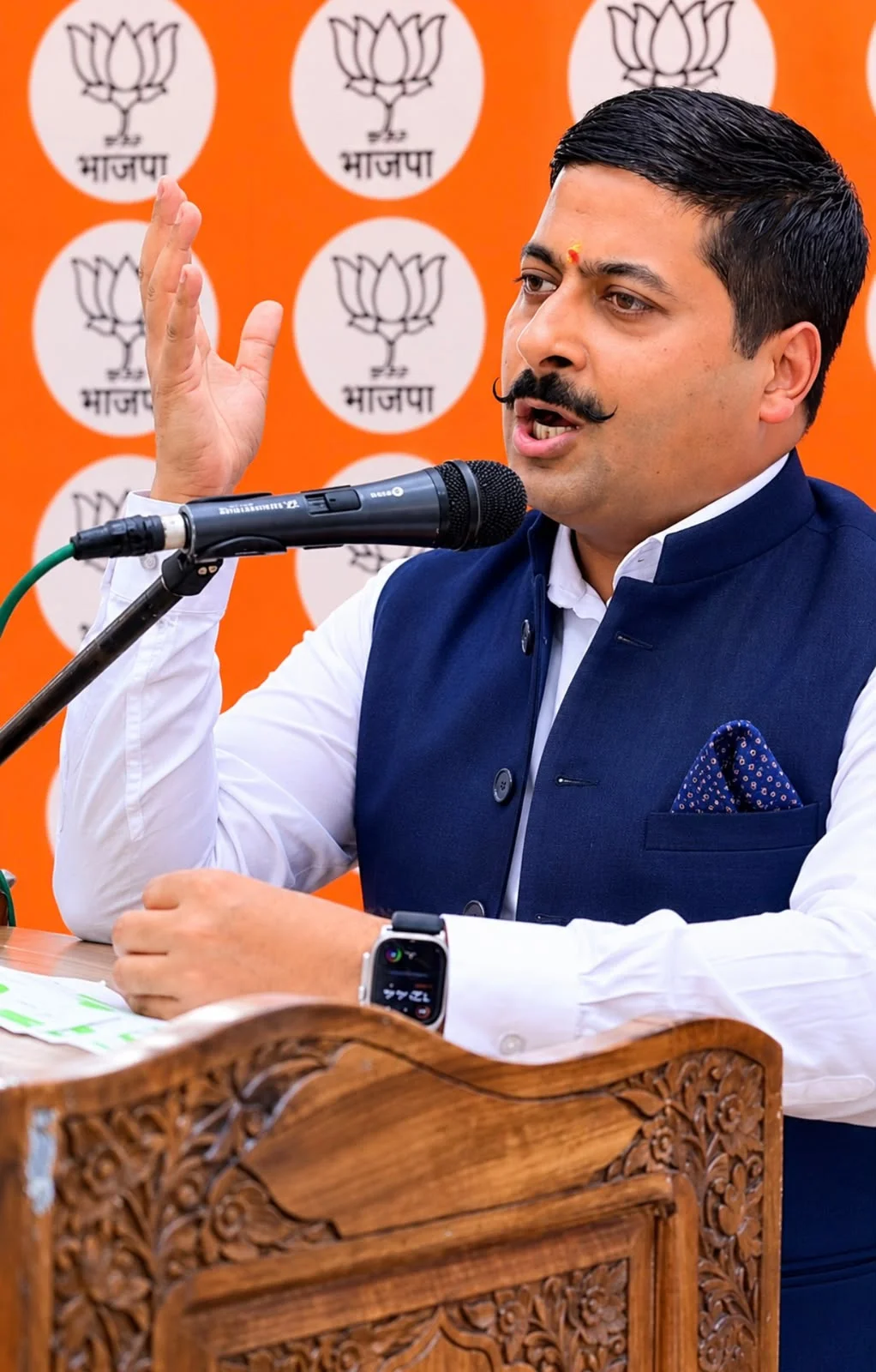
Jammu: BJP Spokesperson and Convenor, International Affairs, Gaurav Gupta on Friday launched a sharp attack on critics of Prime Minister Narendra Modi’s foreign policy, citing US Secretary of State Marco Rubio’s recent visit to Reliance Industries’ Jamnagar refinery in Gujarat as a powerful illustration of India’s growing strategic importance in global energy markets.
Gupta said Rubio’s engagement with India’s refining industry, particularly the American interest in Reliance Industries processing more Venezuelan crude, demonstrates that India’s industrial capabilities have become an important consideration for major global powers.
Rubio described India as a “refining superpower,” highlighting the country’s ability to process heavy crude that only a limited number of refineries worldwide can handle. Reliance’s Jamnagar complex has a combined refining capacity of approximately 1.4 million barrels per day.
“Those who repeatedly questioned Prime Minister Narendra Modi’s foreign policy should take note. When America’s top diplomat visits Jamnagar and openly recognises India as a refining superpower, it highlights the importance of our industrial strength. India is not merely participating in the global energy market; it possesses capabilities that major economies want to engage with,” Gupta said.
He added that the American interest in Venezuelan crude processing reflected the commercial and strategic value of India’s refining infrastructure, demonstrating how Indian expertise can contribute to international energy supply chains.
“India has built world-class industrial capabilities, and today those capabilities are attracting international attention. Our strength lies not in making loud claims, but in creating infrastructure, developing expertise and establishing partnerships that serve our national interests,” Gupta added.
Turning to India’s continued energy engagement with Russia, Gupta said the Modi government’s approach must be understood through the principles of strategic autonomy, energy security and economic pragmatism.
He argued that India’s foreign policy cannot be judged by whether it follows Washington’s preferences, but by whether it protects the interests of Indian consumers, industries and the wider economy.
“While some opposition leaders attempted to portray India as weak in the face of American pressure over Russian oil, the reality is that energy decisions involve complex economic and strategic considerations. India has to secure its energy supplies, protect its economy and make decisions in accordance with its national interests. No country should expect India to abandon independent decision-making simply because another power has different preferences,” Gupta said.
He noted that the United States has previously pressured India to reduce its purchases of Russian crude, including through tariff threats. However, Washington’s approach has also evolved, with President Donald Trump recently waiving certain potential tariff measures affecting major buyers of Russian oil, including India.
Gupta said this evolving situation reinforced the importance of a foreign policy that remains flexible, independent and focused on practical outcomes rather than political posturing.
“India will engage with America, Russia, Venezuela and every other country where cooperation serves our interests. We welcome partnerships, but partnerships cannot mean surrendering our right to make independent decisions. Our energy security and economic stability must remain paramount,” he said.
Gupta maintained that the combination of international interest in India’s refining capabilities and India’s determination to safeguard its energy choices undermines the opposition’s portrayal of the Modi government’s diplomacy as weak.
He said genuine diplomatic strength lies in the ability to maintain relationships with competing global powers, negotiate commercial opportunities and defend national priorities without unnecessary confrontation.
“First, America recognises India’s refining capabilities and seeks greater cooperation with our industry. At the same time, India’s energy policy remains guided by its own requirements and interests. This is the reality that those criticising the Modi government must confront. The narrative that India is weak or incapable of independent decision-making does not stand up to serious examination,” Gupta said.
He stressed that India’s international standing should be assessed through its industrial achievements, strategic partnerships, economic resilience and ability to navigate a complicated geopolitical environment.
“Prime Minister Narendra Modi’s foreign policy is about engaging with the world without compromising India’s autonomy. Whether it is energy, trade, technology or defence, the objective is to secure better outcomes for our people. India does not need to choose its partnerships according to someone else’s political convenience,” he added.
Concluding his remarks, Gupta challenged opposition leaders to move beyond political allegations and acknowledge the significance of India’s expanding global role.
“Rubio’s Jamnagar visit has put India’s refining strength in the international spotlight. And India’s approach to Russian oil underlines a fundamental principle: our decisions must be based on national interest. Those who called India’s foreign policy weak should explain why independent decision-making and growing international engagement are being mistaken for weakness,” Gupta concluded.