SRINAGAR, Aug 26: Lieutenant Governor Manoj Sinha on Wednesday called for expanding advanced healthcare facilities beyond major cities and specialised institutions to ensure quality treatment reaches people in smaller districts and remote areas.
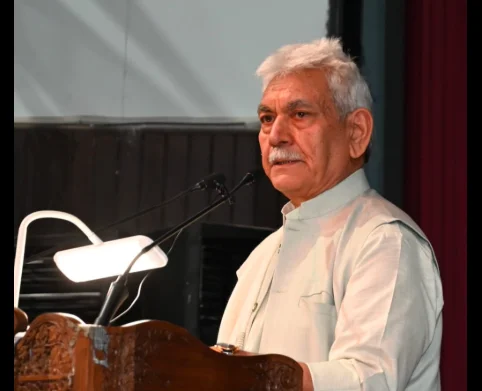
Addressing the inaugural session of the National Summit on “Quaternary Healthcare: A National Strategy for Advanced Care” at SKICC Srinagar, Sinha said bridging the gap between modern medical capabilities and their availability to people was a challenge not only for Jammu and Kashmir but for the entire country.
Recalling his visit to a health centre near Akhnoor during the administration's ‘Back to Village’ programme amid the COVID-19 pandemic, the Lieutenant Governor said discussions with doctors had highlighted the difficulties faced by patients suffering from complex illnesses.
He said families often brought seriously ill children to local health centres expecting diagnosis and treatment, but doctors were sometimes unable to help because of the lack of specialised equipment and facilities.
Sinha said the shortage of advanced healthcare services often forced families from remote areas to travel long distances to Jammu, Chandigarh or Delhi for specialised treatment.
He noted that India had made considerable progress in healthcare over the past decade, including expansion of health insurance coverage, vaccination programmes, medical education and healthcare infrastructure.
The country has also witnessed a significant expansion of medical infrastructure, with new AIIMS, medical colleges and MBBS seats being added across India, including Jammu and Kashmir, he said.
However, Sinha stressed that a gap still existed between what modern medicine could offer and what was actually accessible to people.
He said the healthcare sector must be viewed in the broader context of the vision of a Viksit Bharat, with greater focus on advanced medical care, research and specialised treatment.
Referring to institutions such as AIIMS Delhi, PGI Chandigarh and SKIMS Srinagar, Sinha said they represented India's specialised healthcare capabilities but emphasised the need to develop a comprehensive ecosystem that combines treatment, research and innovation.
“Hospitals should not only be treatment centres but also centres of research and innovation,” he said, stressing that clinical care and research should progress together.
Sinha said every facility made possible by modern science should be available at quaternary healthcare centres, adding that advanced care would require the availability of highly specialised doctors.
He also emphasised the importance of telemedicine in connecting healthcare facilities across Jammu and Kashmir with specialised medical expertise, particularly in remote areas.
The Lieutenant Governor said institutions such as NITI Aayog could contribute towards developing strategies for strengthening advanced healthcare and integrating it with existing systems.
He also called for greater cooperation among Himalayan States, suggesting joint biomedical research initiatives focused on healthcare challenges specific to the region.
The summit brought together healthcare researchers, scientists, medical professionals, administrators and representatives of various institutions to deliberate on advanced and quaternary healthcare, clinical services, research and ways to strengthen the healthcare ecosystem.
Sinha said the ultimate objective should be to ensure that advances in medical science translate into accessible and affordable treatment for citizens, particularly those living far from major urban healthcare centres.