
By Ravish Handoo
High above the Earth’s surface, invisible to the naked eye, a delicate and dynamic dance of gases protects all life below. The ozone layer, our planet’s natural shield against the relentless bombardment of solar ultraviolet radiation, has long been a subject of intense scientific scrutiny. For decades, atmospheric models have mapped its presence, mostly concentrating between 25 and 30 kilometers above the Earth in a region of the stratosphere. However, the atmosphere is a frontier that continues to hold closely guarded secrets.
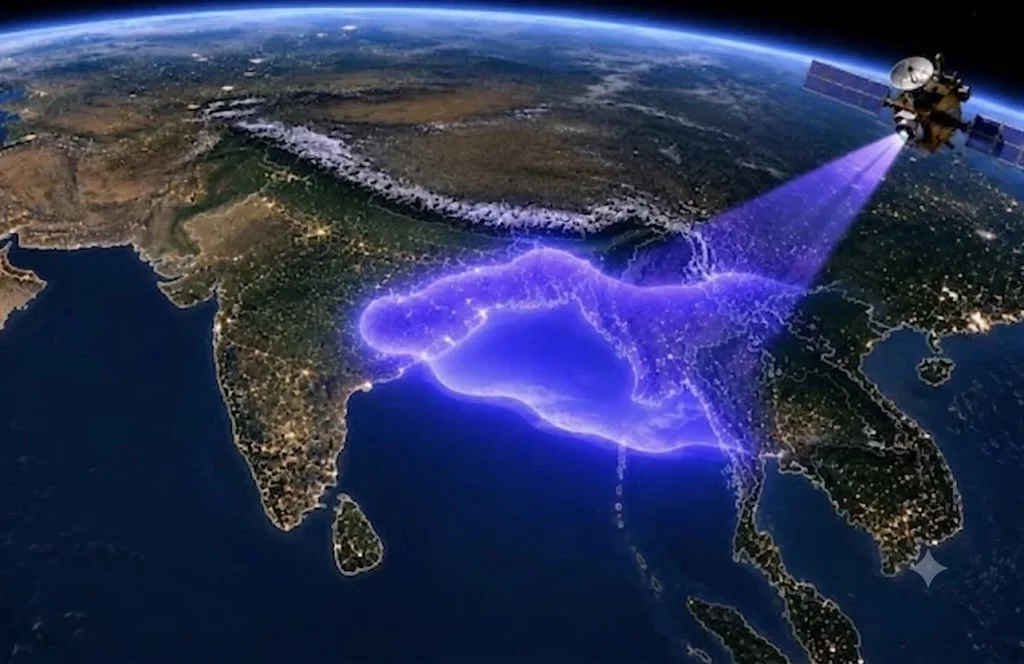
Recently, a groundbreaking discovery by Indian scientists has reshaped our understanding of this invisible shield. In an unprecedented atmospheric event, researchers detected an unusually thick, highly concentrated layer of ozone hovering at an anomalous altitude over the North Bay of Bengal and eastern India. This never-before-seen structural anomaly, resting at an altitude of 21 to 23 kilometers, has opened a new chapter in climate science, atmospheric dynamics, and meteorological tracking.
To understand the magnitude of this discovery, one must first understand the standard architecture of the sky. The Earth's atmosphere is divided into distinct layers. The troposphere is where we live and where weather happens, extending from the ground up to about 10 to 15 kilometers. Above that lies the stratosphere, stretching up to 50 kilometers. It is within the stratosphere that the famous ozone layer resides.
Under normal atmospheric conditions, stratospheric ozone is created when ultraviolet light from the sun strikes oxygen molecules, splitting them into individual oxygen atoms. These free atoms then combine with unbroken oxygen molecules to form ozone. Because this photo-chemical reaction requires intense sunlight, the highest concentrations of ozone naturally pool at altitudes of 25 to 30 kilometers.
However, during a recent winter observation cycle, scientists looking over the Indian subcontinent noticed something that defied conventional daily atmospheric models. Over the North Bay of Bengal and spanning across eastern India, a massive, persistent, and incredibly thick pocket of ozone had settled much lower than it had any right to be. Instead of floating at the standard 25 to 30-kilometer mark, this highly concentrated ozone layer was detected between 21 and 23 kilometers above the surface.
This was not a fleeting whisper of gas or a momentary glitch in the data. The enhanced ozone structure was remarkable for its persistence. It lingered for more than a day, holding its concentrated form and remaining entirely observable throughout both the daylight hours and the dead of night. In the chaotic, high-speed wind currents of the upper atmosphere, for a gas pocket of this density to remain structurally intact and localized for over 24 hours is an extraordinary meteorological phenomenon.
The ozone was not being created at this lower altitude, but rather it was being pushed there. This anomalous layer provided scientists with the elusive missing link, serving as the first highly detailed, quantitative experimental evidence of how ozone-rich air from the upper stratosphere is physically transported downward and redistributed across the Indian subtropical region.
The Earth’s atmosphere is not a static envelope of air; it is a violently active fluid environment driven by temperature variations, the planet's rotation, and solar energy. To grasp why this 21-23 kilometer high ozone pocket over the Bay of Bengal is so significant, we must look at the mechanics of atmospheric circulation. Historically, scientists have theorized about complex circulation patterns which suggest that air moves from the tropics toward the poles, slowly sinking as it goes. However, tracking the exact localized movements of these high-altitude rivers of air, especially vertical downdrafts, has been incredibly difficult.
The discovery over the Bay of Bengal acts as a colossal atmospheric tracer dye. Because ozone is highly concentrated in the upper layers, tracking its sudden appearance in the lower stratosphere allows scientists to essentially see the invisible wind currents. During the winter months, the Indian subcontinent experiences specific temperature inversions and shifting jet streams. The researchers concluded that dynamic wind processes and powerful upper-atmospheric downdrafts were capturing ozone-rich air from higher altitudes and mechanically forcing it downward. Once pushed into the 21-23 kilometer range, the air mass settled, creating this unusually thick layer over the Bay of Bengal.
This redistribution is a critical finding. It proves that the ozone layer is highly mobile and that winter atmospheric dynamics over the subtropics play a massive role in shaping the concentration of UV-absorbing gases over heavily populated regions. It demonstrates a beautiful, albeit complex, natural mechanism of atmospheric replenishment and chemical transport.
A discovery of this magnitude does not happen by chance. It cannot be captured by a single individual looking through a telescope or a solitary weather balloon floating into the void. The detection of this localized ozone anomaly was the direct result of one of the most ambitious, synchronized atmospheric observation efforts ever undertaken in India, known as the Phase-I NetRAD-ASMA campaign. NetRAD stands for Network of Radars, while ASMA refers to the Asian Summer Monsoon Anticyclone and its associated atmospheric phenomena. This nationwide campaign was designed to cast an invisible, high-frequency net over the Indian sky, monitoring the atmosphere in high-definition, three-dimensional real-time.
To catch the downward transport of the ozone layer, scientists had to synchronize data across the entire geographic expanse of India. The campaign linked up a massive array of ground-based observatories and radar installations. The primary data anchor was located in the foothills of the Himalayas at the Aryabhatta Research Institute of Observational Sciences in Nainital. But Nainital could not do it alone. The radar network required triangulation and comparative data to ensure that what they were seeing wasn't a localized equipment error, but a massive regional event.
Simultaneously, massive radar arrays in Haringhata in West Bengal, Gadanki in Andhra Pradesh, and Kochi in Kerala pointed their invisible beams into the stratosphere. By linking these four distinct geographic nodes spanning the Himalayas, the eastern coast, the deep south, and the western coast, the campaign created a synchronized observational grid capable of capturing the most subtle atmospheric shifts. When the thick layer of ozone descended over the North Bay of Bengal, it triggered the sensors across the eastern network, providing a pristine, high-resolution dataset that captured the event from its inception to its eventual dissipation.
To look 23 kilometers into the sky and measure the chemical composition and movement of a transparent gas requires an arsenal of cutting-edge technology. The success of the campaign relied on a harmonious blend of ground-based deep-sky radars, high-tech weather balloons, and multi-national space satellites. The unsung hero of this discovery is an indigenous marvel of Indian engineering, the 206.5 MHz Stratosphere-Troposphere Radar. Located in Nainital, this specific frequency of radar is uniquely tailored for atmospheric research.
Unlike conventional weather radars that bounce microwaves off physical raindrops or airplanes, these specialized radars are designed to detect microscopic fluctuations in the refractive index of the air itself. By firing powerful pulses of radio waves straight up into the sky, the radar can detect regions of atmospheric turbulence, temperature inversions, and varying densities of air masses. When the ozone-rich air was transported downward, it created a distinct boundary layer of turbulence and temperature shifts that the radar was able to paint with extreme precision. The radar tracked the physical movement of the wind, proving the dynamic downdraft mechanism.
While radar can map the structure and movement of the air, it cannot chemically analyze it. To get absolute confirmation that the sinking air mass was indeed packed with ozone, the researchers launched specialized weather balloons carrying payloads known as radiosondes and ozonesondes. These balloons ascend through the troposphere and into the stratosphere, directly tasting the air as they climb. They provided the vital air truth, transmitting real-time data back to the scientists that confirmed the massive spike in ozone concentration at the 21-23 kilometer mark.
To get a macro-view of the entire Bay of Bengal, the scientists turned to space. The Indian Space Research Organisation utilized its advanced meteorological satellite, INSAT-3DR. Positioned in a geostationary orbit, it possesses advanced atmospheric sounders capable of measuring temperature, humidity, and atmospheric profiles across massive geographical areas. Simultaneously, the team utilized data from the Aura Microwave Limb Sounder, a NASA satellite dedicated to understanding the chemistry and dynamics of the Earth's atmosphere. This instrument looks at the edge of the Earth's atmosphere, measuring naturally occurring microwave thermal emissions, allowing it to profile the vertical distribution of trace gases like ozone with astonishing accuracy.
Behind every great technological feat is a team of visionary scientists. The discovery of the anomalous ozone layer was spearheaded by researchers from the Aryabhatta Research Institute of Observational Sciences. Situated at an altitude of nearly 2,000 meters in the Kumaon region of the Himalayas, it operates as an autonomous body under the Department of Science and Technology of the Government of India. Its high-altitude location provides clear, unpolluted access to the sky, making it one of the premier atmospheric research institutes in Asia.
The critical analysis and successful execution of the radar tracking were led by distinguished researchers Dr. Manish Naja and Dr. Samaresh Bhattacharjee. Their expertise in atmospheric trace gases, radar operations, and atmospheric dynamics allowed them to synthesize the massive terabytes of data pouring in from the ground stations and orbital satellites. They did not work in isolation, as the Indian Space Research Organisation played an indispensable collaborative role. ISRO not only provided the critical satellite tracking but also contributed sophisticated atmospheric modeling capabilities. By plugging the radar and satellite data into supercomputers, the team could retroactively model the wind currents and prove exactly how the ozone was transported downward.
The culmination of this exhaustive research was subjected to rigorous global peer review. Ultimately, the findings of this nationwide campaign were published in Earth and Space Science, a highly respected, high-impact journal published by the American Geophysical Union. This publication cemented the discovery as a globally recognized scientific milestone, placing Indian atmospheric research at the absolute forefront of the field.
The implications of this discovery are vast, touching upon climate change modeling, meteorological forecasting, and our understanding of human protection against solar radiation. Global climate models depend heavily on understanding how gases are distributed in the atmosphere. Ozone is not just a shield against ultraviolet light; it is also a radiatively active gas, meaning it interacts with heat. The presence of a highly concentrated, persistent layer of ozone at a lower-than-expected altitude can alter localized temperature profiles in the lower stratosphere.
Before this discovery, climate models largely assumed a more uniform distribution of ozone across the subtropics at the 25-30 kilometer range. Now, scientists must update these models to account for this newly discovered downward transport mechanism. If winter winds routinely pull ozone down over the Bay of Bengal, it alters the thermal dynamics of the atmosphere over the entire region. Furthermore, the Bay of Bengal is the meteorological engine for the Indian subcontinent. The temperature gradients over this body of water drive cyclonic activity and heavily influence the Asian monsoon system. Understanding these high-altitude wind processes can lead to more accurate long-term weather forecasting and a better understanding of how the upper atmosphere interacts with the tropospheric weather below.
The primary job of the ozone layer is to absorb biologically damaging radiation. A localized thickening of the ozone layer at a lower altitude essentially provides an intensified sunscreen effect over that specific geographic area. Understanding exactly how, when, and why ozone redistributes itself naturally over heavily populated regions helps public health officials and climate scientists better predict fluctuations in radiation reaching the Earth's surface. Finally, this discovery is a testament to the resilience and dynamic nature of the ozone layer itself, showing that ozone distribution is not static but rather naturally moved, concentrated, and recycled by planetary winds.
The detection of a never-before-seen ozone layer at 21 to 23 kilometers above the North Bay of Bengal is far more than a meteorological curiosity. It is a triumph of scientific collaboration, technological ingenuity, and human curiosity. Through the synchronized efforts of the Phase-I NetRAD-ASMA campaign, researchers achieved the impossible by making the invisible wind visible. They captured the natural downward transport of Earth's most vital protective gas, proving that the sky above us is not a dormant void, but a complex, breathing entity. As climate change continues to alter global weather patterns, understanding these intricate atmospheric mechanisms is more crucial than ever, and this discovery is undoubtedly only the first of many to come.