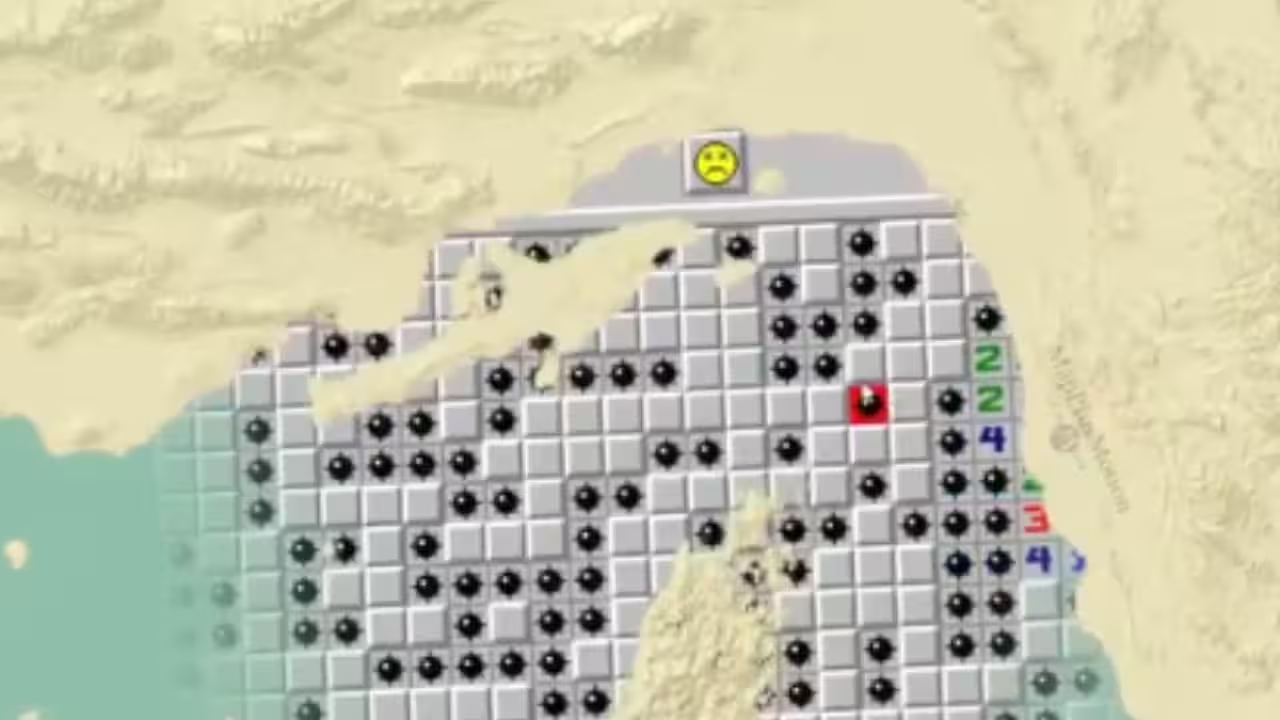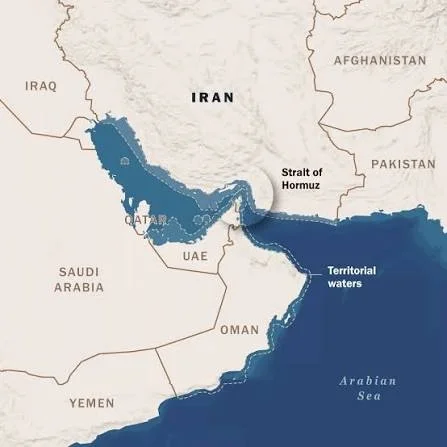
CAIRO, Aug 8: Iran’s leadership believes it can emerge victorious from the ongoing confrontation with the United States by maintaining pressure around the strategically vital Strait of Hormuz, betting that Washington will eventually be forced to compromise.
Iranian officials are banking on several factors, including declining US stocks of advanced missile interceptors, growing domestic opposition to the conflict in America and the economic impact of high energy prices ahead of the November congressional elections.
They also calculate that any attempt by the US to reopen the waterway by force could prove costly and potentially require the deployment of ground troops. Iran’s allies in Yemen could further widen the conflict by disrupting another major international trade route.
By this calculation, Tehran believes US President Donald Trump may ultimately have little option but to reach an accommodation.
However, analysts warn that the strategy carries significant risks for Iran as well.
Iran has said it is nearing an arrangement with Oman to manage the Strait of Hormuz, which separates the two countries. Tehran has indicated that such an agreement would depend on Washington lifting its blockade, meaning Trump would ultimately have to approve any settlement even if there are no direct US-Iran negotiations.
The details of a possible agreement, including whether Iran would be permitted to impose transit fees, remain unclear. However, formalising Tehran’s role in managing the waterway could give Iran greater control over a route that previously functioned as an open international passage and carries a significant share of global oil and gas shipments.
Analyst Abdolreza Davari, a former adviser to ex-Iranian President Mahmoud Ahmadinejad, said Tehran’s control over the strait has strengthened its bargaining position with Washington and regional countries.
According to Davari, Iran is seeking not merely economic benefits from the waterway but recognition of its role in managing and exercising authority over the strategic passage.
Any formal Iranian control over part of the strait would represent a major strategic gain for Tehran and a setback for Washington, while potentially challenging established international principles governing freedom of navigation.
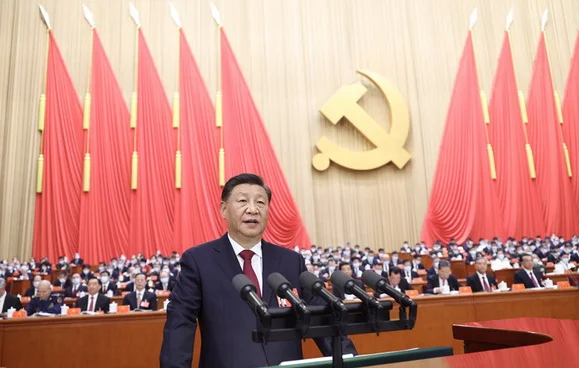
China, a major buyer of Iranian oil with influence in Tehran, has also called for the restoration of safe and normal passage through the strait.
Iranian officials increasingly argue that time is working in their favour.
Mahdi Mohammadi, an adviser to Iran’s chief negotiator, said Tehran was seeking the defeat of its adversaries rather than simply an agreement to end the conflict.
Iran has repeatedly maintained that the Strait of Hormuz will not simply return to its pre-war status and has threatened to prevent ships from passing through without its permission. Iranian military officials have described control of the waterway as a key strategic red line.
Security analyst Mostafa Najafi said the strait had become an important tool for Iran to strengthen deterrence, influence the regional balance of power and reshape security arrangements in the Persian Gulf.
The issue could also complicate efforts to revive negotiations over Iran’s nuclear programme. Analysts say control over the waterway could provide Tehran with additional leverage if nuclear talks resume.
Despite its confidence, Iran is facing severe economic pressure as the conflict continues.
US and Israeli strikes have damaged parts of Iran’s industrial infrastructure, while the US blockade has significantly restricted Iranian oil exports. Rising food prices have further increased pressure on ordinary Iranians, while Washington has threatened additional strikes against critical civilian infrastructure.
The economic strain also raises the possibility of renewed domestic unrest. Previous protests over economic conditions were met with a heavy government crackdown, exposing the challenges facing Iran’s leadership.
Former Iranian foreign minister Mohammad Javad Zarif, who played a key role in negotiating the 2015 nuclear agreement, has argued that the conflict has created an opportunity for diplomacy. However, he warned that delaying a settlement could make economic recovery more difficult and increase the risk of renewed internal unrest or further conflict.
The conflict has already produced outcomes that were difficult to predict. Following the initial US and Israeli strikes that killed Iran’s supreme leader and other senior officials, Trump had suggested that the confrontation could end within weeks.
Instead, Iran’s leadership has remained defiant, while the conflict has rallied supporters around the government.
Analysts say Tehran is using control of the Strait of Hormuz to demonstrate that it has not been defeated and to reinforce its domestic standing.
However, they caution that Iran’s ability to withstand sustained economic and military pressure has limits.
Rahman Ghahremanpour, an Iran-based analyst, said Tehran could not maintain its current strategy indefinitely and would eventually have to reach an agreement with Washington.
For now, however, Davari believes Iran is unlikely to abandon its position despite the mounting economic difficulties, suggesting that Tehran remains prepared to endure further pressure in pursuit of greater strategic leverage.