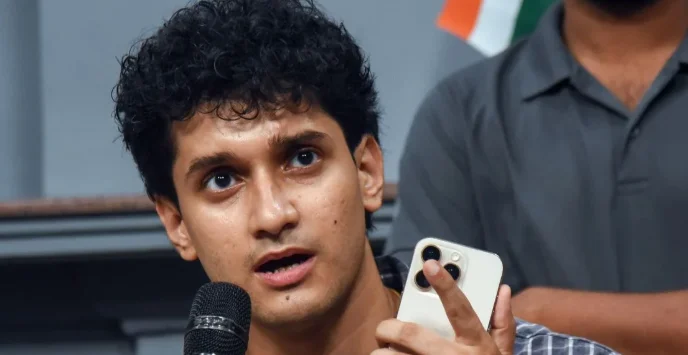
New Delhi, Aug 16 : Three sets of questions concerning the Cockroach Janta Party-led youth protests were disallowed during the recent Monsoon Session of Parliament citing admissibility conditions, CJP chief spokesperson Saurav Das said on Sunday, criticising the decision.
In a post on X, Das said Lok Sabha MP Matheswaran V S of the DMK had sought answers from the Union Home Ministry and the Union Education Ministry through three sets of questions, bearing notice reference numbers 101799 and 101801.
The questions sought information on refund of application fees for NEET-UG 2026, growing public distrust in the government, denial of drinking water and sanitation facilities to CJP protesters in Delhi, the government’s engagement with protesting students and youth, student welfare, paper leaks and education reforms, and the treatment of citizens exercising their fundamental right to peaceful protest, Das said.
But “very bizarre justifications” were given for rejecting “perfectly legitimate questions”, he said.
Das said the questions were disallowed citing Rule 41(2), including clauses (i), (iv), (v), (xviii) and (xxii).
Under Rule 41(2) of the Lok Sabha Rules of Procedure and Conduct of Business, questions have to meet certain admissibility conditions.
Clause (i) says a question should be clearly and precisely expressed and not be too general or incapable of a specific answer; Clause (iv) bars arguments, inferences, imputations, epithets or defamatory statements; and Clause (v) bars questions seeking an expression of opinion or the solution of an abstract legal question or hypothetical proposition.
Clause (xviii) bars questions seeking information on matters under adjudication by a court, while Clause (xxii) says questions should not ordinarily seek information on matters under consideration by a Parliamentary Committee.
When contacted, Matheswaran confirmed that the questions had been disallowed and said he received the information through the Lok Sabha members’ portal.
Reacting to it, Das raised the issue of the government’s accountability to Parliament over the handling of the protests.
“Yet, these questions were disallowed citing Rule 41(2), including clauses (i), (iv), (v), (xviii) and (xxii). Very bizarre justifications for perfectly legitimate questions,” he said.
“If these questions cannot be asked in Parliament, where exactly is the Government supposed to be held accountable? Through protests? Why did Home Minister Amit Shah not come before Parliament during those crucial weeks and answer questions concerning the police action against protesters?” Das said.
The right of an MP to question the Executive is not some procedural nuisance but is actually the heart of parliamentary democracy. Question Hour exists precisely because ministers who exercise enormous public power must answer to the elected representatives of the people. Otherwise, of course, people will be forced to come out on the roads,” he said.
“You can’t gag the Parliament and make it a rubber-stamp for your half-baked policies. You cannot ignore the youth. This is not our idea of India!” Das said.
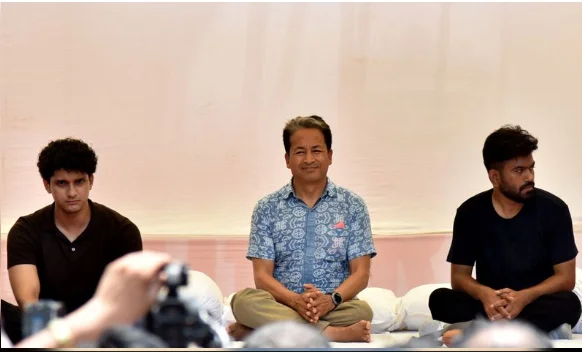
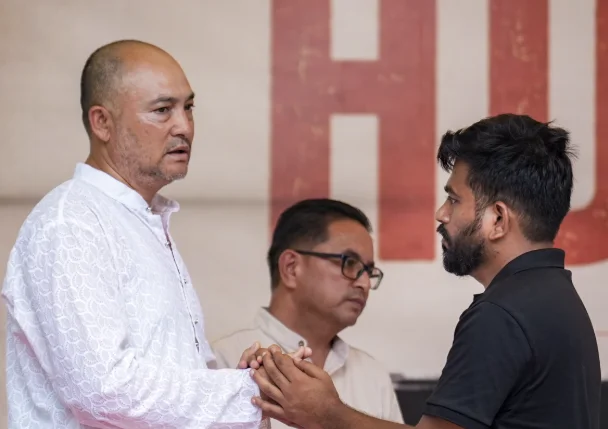
The CJP-led protests began in June over the NEET-UG examination and wider concerns over paper leaks, examination reforms and student welfare.
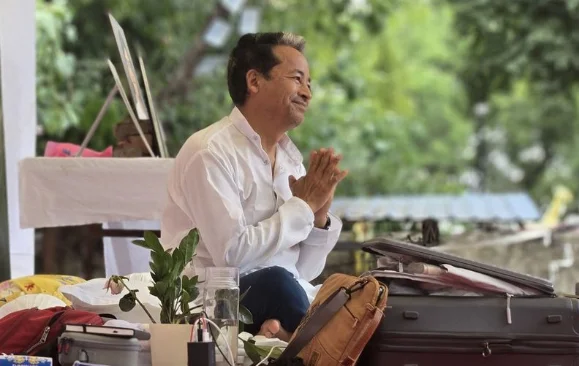
The agitation intensified after activist Sonam Wangchuk joined the protest at Jantar Mantar and began an indefinite hunger strike. The protesters later organised a ‘Sansad Chalo’ march on July 20, during which police action, including the alleged use of pellet guns, became a major issue.
The CJP later called off its agitation after the government accepted its demands, including the resignation of Dharmendra Pradhan from the post of education minister.
The CJP had also demanded accountability over the use of force against protesters and sought an explanation from Shah, whose ministry oversees the Delhi Police.
Opposition parties subsequently raised the issue in Parliament and demanded that Shah explain who authorised the alleged use of pellet guns and other force against the protesters.
The issue contributed to repeated disruptions in both Houses.
The Lok Sabha website says the admissibility of questions is governed by Rules 41 to 44, besides the Speaker’s directions, parliamentary precedents and established practices.